Tapa Sveda
Tapa Sveda (fomentation therapy) is a cornerstone of Ayurvedic treatment, primarily used to induce therapeutic sweating to alleviate systemic rigidity (Stambhata), heaviness (Gauravata), and coldness (Sheetata). Known as both a preparatory procedure (Purvakarma) for detoxification (Shodhana) and a powerful palliative (Shamana) treatment, Svedana works by liquefying deep-seated toxins (Ama) and clearing the body's micro-channels (Srotoshodhana). Tapa Sveda (dry contact heat) is uniquely a Ruksha (dry) therapy, making it ideal for disorders dominated by Kapha and Medas (adipose tissue). The therapy is indicated for musculoskeletal pain, stiffness (Vataja disorders), gastrointestinal obstructions, and gynecological conditions, but requires strict precautions, particularly regarding Pitta aggravation, high fever, and patient mental endurance.


What is Tapa Sveda ?
In Ayurveda, Svedana is a way to make you sweat. This helps to loosen stiff joints and clear out bad stuff in your body. It is often used before other treatments. Svedana can also be used on its own to make you feel better. Tapa Sveda is a special kind of Svedana. It uses dry heat on parts of your body. This helps to fight coldness, heaviness, and stiffness. It is very good for people who have too much fat or bad stuff in their bodies.
तत्र तापस्वेद: पाणिकांस्यकन्दुककपालवालुकावस्त्रै: प्रयुज्यते, श्रायानस्य चाङ्गतापो श्रुत: खादिराङ्गारैरिति॥
Transliteration: Tatra tāpasvedaḥ pāṇikāṃsyakandukakapālavālukāvastraiḥ prayujyate, śāyānasya cāṅgatāpo śrutaḥ khādirāṅgārairiti||
English Translation: "Among these, Tapa Sveda is administered using the hands (pani), heated bronze plates (kamsya), metal bowls (kanduka), earthen potsherds (kapala), sand (valuka), or cloth (vastra). Additionally, exposing the body of a reclining patient to the radiant heat of burning Khadira (Acacia catechu) charcoal is also classified under Tapa Sveda." — Sushruta Samhita, Chikitsasthana, Chapter 32, Shloka 4.
Key Health Benefits
Fixes Stiffness (Stambhahara)
Tapa Sveda opens up small blood vessels. This helps to fix stiff joints.
Makes You Feel Lighter (Mridukarana)
As observed in Parisheka (herbal pouring), the application of warm liquids softens hardened, chronic, deep-tissue lesions (kathina, dushta mamsagata vrana), enhancing tissue flexibility and helping to heal stubborn wounds
Heals Wounds (Vranaropana)
Warm dousing (Seka) with medicated Ghrita or decoctions improves local blood supply to wounds (Vrana), accelerating granulation and healing.
How it Works (Procedure Steps)
Phase 1: Purva Karma (Pre-Procedure Preparation)
Patient Assessment
Assess the patient's constitution (Prakriti), current state of the doshas (Vikriti), and mental endurance (Satva). A psychological assessment is essential before intensive therapies like Jentaka Sveda to rule out claustrophobia or panic disorders
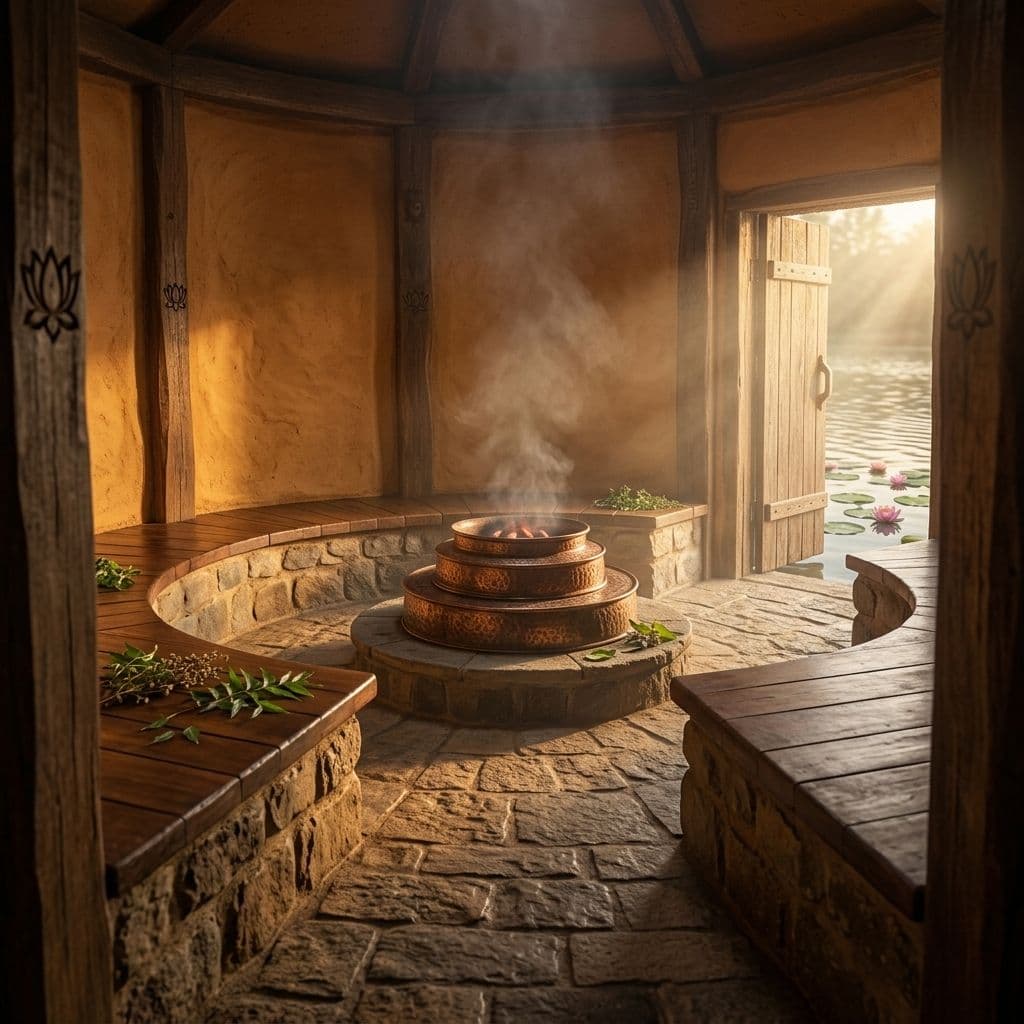
- Location: Built on fertile land with black, sweet, or golden soil near a clean water source.
- Dimensions: Constructed as a circular, well-plastered chamber (Kutaagara) measuring 16 aratni (approx. 24 feet) in circumference and height, containing multiple ventilation windows (anekavaatayanum) .
- Internal Layout: A continuous brick bench (Pindika), 1.5 feet wide and 1.5 feet high, is constructed along the inner wall up to the door.
- Central Furnace (Kandu): A hollow central pillar (Kandu), 4 kishku (approx. 4 feet) in circumference and matching the patient's height (purushapramana), is built with numerous fine pores and a secure lid . This furnace is filled with dense Khadira or Ashvakarna wood and ignited until it is completely smoke-free, filling the room with ambient dry heat.
Preparatory Procedures
- Abhyanga: Massage the patient's entire body with a suitable Vata-Shamana oil (such as Bala Taila or Erandadi Taila).
- Covering: Wrap the patient in a light cotton cloth to shield the skin from direct contact burns while allowing heat penetration.
Phase 2: Pradhana Karma (The Main Procedure)
Protocol A: Tapa Sveda (Dry Conductive Contact)
- Heating the Medium: Heat the selected conductive material (sand bolus, bronze plate, or clay potsherds) to a tolerable temperature (approx. 42°C – 45°C) over a smoke-free heat source.
- Application: Gently apply the heated material to the affected area. Maintain constant, rhythmic motion, or use light, intermittent dabbing (Tapa).
- Pediatric Adaptations: For young children, use the gentle warmth of the practitioner's warmed palms (Pani Sveda) or a warm cotton cloth pad .
- Duration: Continue the application for 15 to 30 minutes, or until sweat beads appear on the face and the patient experiences relief from stiffness.
Modern Adaptation
- System Design: Use a wooden cabinet or steam bed (6 ft long, 3 ft wide, 2 ft high) with a sturdy lattice net top [C. Kumbhi Sveda].
- Steam Generation: Position a 20-liter copper or stainless steel vessel filled with Vatahara decoction on a regulated heat source (such as an electric or gas burner) beneath the bed [C. Kumbhi Sveda].
- Application: Have the patient lie on the bed while the head remains outside the steam chamber to prevent cranial overheating [C. Kumbhi Sveda]. Control steam volume by regulating the heat source [C. Kumbhi Sveda].
Phase 3: Paschat Karma (Post-Procedure Care)
Immediate Recovery
- Rest: Have the patient rest in a comfortable, draft-free room.
- Sweat Removal: Gently wipe away sweat using a clean cotton towel or absorbing paper .
- Eye Care: Do not apply cold water to the eyes immediately after the procedure. Allowing cold water to contact eyes that are still hot from the therapy can cause rapid temperature changes, potentially damaging ocular tissues.-
- Bathing: After body temperature stabilizes (approx. 20-30 minutes), the patient may bathe in lukewarm water [106].
Dietary Management (Samsarjana Krama)
- Post-Treatment Diet: Serve a light, warm, easily digestible meal (such as Yusha - lentil soup, or Peya - thin rice gruel) to gently rekindle the digestive fire (Agni) [Post operative measures].
Parihara Vishaya (Precautions and Things to Avoid)
- Avoid immediate exposure to cold air, drafts, air conditioning, and drinking cold water [Precaution].
- Avoid strenuous physical exercise, sexual activity, and sleeping during the day immediately after treatment.
Best Suited For
Specific Clinical Conditions
- Vataja Nerve and Muscle Problems: Bad back pain, arm pain, half-body weakness, full-body weakness, stiff back, and bad cramps. Severe sciatica, brachial neuralgia, hemiplegia, paraplegia, ankylosing spondylitis, and Apatanaka (tetanic convulsions) [S. Ch 5/7, S. Ch 5/17].
- Chronic Joint Conditions: Sandhigata Vata (osteoarthritis) with stiffness and pain, and Amavata (rheumatoid arthritis) under the guidance of a qualified practitioner.
- Gastrointestinal and Metabolic Disorders: Gulma (abdominal tumors/distension) accompanied by trapped gas and constipation (varcha-vayu-vibandha)—ideally treated with Kumbhi Sveda [S. Ut 42/56].
- Reproductive System Pathology:
- Vatika Yoni Roga (Vata-dominated uterine pain and spasms) [C. Ch 30/48].
- Prasramsini Yoni (uterine prolapse), managed with Ghrita massage followed by warm milk sudation (ushna dugdha svedana).
- Shukragata Vata (seminal tract disorders), managed with Karshu Sveda or Kutira Sveda.
Constitutional Suitability
- Kapha-Prakriti & Vata-Kapha Prakriti: Excellent for individuals with these constitutions due to their susceptibility to coldness, stagnation, and water retention.
- Medas-Pradhana (Obese/Adipose-Dominant): Tapa Sveda's dry, scraping properties make it highly suitable for addressing excess adipose tissue and systemic congestion [F].
Avoid If (Contraindications)
- Pitta Aggravation & Inflammatory Conditions: Contraindicated in active inflammatory arthritis, acute gouty arthritis, localized burning sensations (Daha), and bleeding disorders (Raktapitta).
- Ama (Acute Stage): Contraindicated during acute systemic infections, high fevers (Taruna Jvara), or severe indigestion where Ama has not yet settled into the tissues.
- Pregnancy & Menstruation: Avoid systemic or lower-abdominal heat application.
- Cardiovascular and Dermatological Conditions: Contraindicated in cases of severe hypertension, cardiac arrhythmias, infectious skin diseases, and open wounds (unless specific, localized Seka is prescribed).
- Jentaka Sveda Specific Contraindications: Strictly contraindicated in patients with:
- Alpasatva (low mental endurance or panic tendencies)
- Unmada (psychosis/schizophrenia).
- Apasmara (epilepsy).
- Claustrophobia, due to the risk of panic-induced cardiovascular stress in closed, high-heat environments
How Your Body Works
Svedana helps to fix three main problems: stiffness, feeling heavy, and feeling cold. It does this by opening up tiny paths in your body:
- Fixing Your Body's Balance: Tapa Sveda is dry. This fights the wet and heavy stuff in your body, like bad fat. It is great for people with too much bad stuff or fat. Wet or steam-based sweating is better for people who are too dry.
- Opening Up Your Body's Paths: Svedana opens up tiny paths in your body. This helps to clear out bad stuff. For example, Jentaka Sveda clears out all the tiny paths, so bad stuff can leave your body.
How It Works in Your Body
Tapa Sveda helps your body in these ways:
- Heat and Blood Vessels: Dry heat makes your skin warm. This opens up small blood vessels. This helps to clear out bad stuff.
- Muscle Release: Heat makes tight muscles relax. This helps to fix stiff muscles.
- Pain Control: Heat helps to stop pain. It makes pain signals slower than heat signals.
- Heat Shock Proteins: Heat makes your cells stronger. This helps to fix damage.
What Tools Are Used?
The tools used for Tapa Sveda have special heat properties:
- Solid Tools (Tapa Sveda): Bronze, brass, sand, clay, iron, and dry wood. These things hold heat well and do not burn your skin.
- Herbal Pastes (Ushma Sveda): Warm herbal packs with seeds. These help to fight pain and swelling.
- Liquid Tools (Ushma Steam): Meat soup, milk, curd, oils, sour drink, and special leaf mix. Sour drink helps to open your skin for medicine.
What the Words Mean
The word "Svedana" comes from the word "Svid," which means "to sweat." "Tapa" means "to heat." So, Tapa Sveda means using dry heat to make you sweat and feel better.
Textbook literature
चतुर्विध: स्वेद; तद्यथ्य— तापस्वेद, ऊष्मस्वेद, उपनाहस्वेदो, द्वस्वेद इति; अ सर्वस्वेदविकल्पावरीध:॥३॥
English: "There are four kinds of Svedana: Tapa Sveda (dry heat), Ushma Sveda (steam heat), Upanaha Sveda (warm pack), and Drava Sveda (liquid pour). All other kinds of sweating treatments are part of these four." — Sushruta Samhita, Chikitsasthana, Chapter 32, Shloka 3.
Conclusion
Svedana, particularly Tapa Sveda, is a foundational therapy in Ayurvedic medicine that bridges classical principles with modern thermal physiology. By targeting Stambhata, Gauravata, and Sheetata, these therapies clear systemic channels (Srotoshodhana) and restore balance to the nervous and musculoskeletal systems. Whether applied through classical methods like the Jentaka chamber or adapted to modern clinical systems like regulated steam beds, Svedana remains an effective, time-tested approach to detoxification and systemic restoration.
Frequently Asked Questions
How is Jentaka Sveda monitored safely in modern clinical practice?▼
In modern Ayurvedic hospitals, Jentaka chambers can be equipped with real-time monitoring technology [Jentaka Note]. This includes heat-resistant, closed-circuit television (CCTV) cameras, intercom systems, and internal temperature-humidity sensors, allowing the clinical team to monitor the patient's condition and provide guidance throughout the session
Why is cold water contraindicated for the eyes immediately after Svedana?▼
During Svedana, the blood vessels in the eyes dilate to manage the heat. Applying cold water immediately causes rapid vasoconstriction, which can disrupt blood flow and strain ocular tissues . Waiting for the body to cool down naturally protects the eyes from thermal stress.
What is the difference between Kutira Sveda and Jentaka Sveda?▼
Kutira Sveda is conducted in a windowless, moderately sized chamber warmed by four charcoal heaters placed at the corners of the bed; it is gentler and suited for patients with sensitive constitutions (mridu-kaya). Jentaka Sveda uses a larger, multi-windowed circular chamber with a powerful central furnace (Kandu), producing intense, deep-tissue dry heat suitable for robust individuals with deep-seated chronic conditions.
When is dry heat (Tapa Sveda) preferred over steam heat (Ushma Sveda)?▼
Tapa Sveda (dry heat) is preferred in conditions dominated by Kapha, Medas (fat), or Ama (metabolic toxins), such as obesity or chronic stiffness with fluid retention, because its dry quality (Ruksha Guna) balances these damp, heavy states. Ushma Sveda (wet steam) is preferred for Vata-dominated conditions where dryness (Rukshata) is already elevated and requires hydration.
Can Tapa Sveda be safely administered to pediatric patients?▼
Yes. For young children, intensive therapies are replaced with Pani Sveda (gently rubbing the practitioner's warmed palms together and placing them on the child's body) or applying a warmed, soft cotton cloth, which provides a safe, comfortable treatment.
References
- Charaka Samhita of Agnivesha. Ed. Acharya JT. Sutrasthana; Chapter 13 (Sveda Adhyaya). Varanasi: Chaukhambha Orientalia; 2014. [C.Su 13/46, 13/49, 13/50-51, 13/52-54, 13/55, 13/56-58, 13/59-60, 13/60-63].
- Sushruta Samhita of Sushruta. Ed. Acharya JT. Chikitsasthana; Chapter 32 (Svedopachara Adhyaya). Varanasi: Chaukhambha Sanskrit Sansthan; 2018. [S. Ch 32/3, 32/4, 32/5-7].
- Ashtanga Hridaya of Vagbhata. Ed. Paradkara HSS. Sutrasthana; Chapter 17 (Svedavidhi Adhyaya). Varanasi: Chaukhambha Sanskrit Sansthan; 2020. [A.H.Su 17/1, 17/2, 17/6-7].
- Chakrapanidatta. Ayurveda Dipika Commentary on Charaka Samhita. Ed. Acharya JT. Varanasi: Chaukhambha Orientalia; 2014. [C. P on C.Su 13/46, C. P on C.Su 13/59-60, C. P on C.Su 13/60-63].
- Dalhana. Nibandhasangraha Commentary on Sushruta Samhita. Ed. Acharya JT. Varanasi: Chaukhambha Sanskrit Sansthan; 2018. [Dalhana on S.Ch 32/3, Dalhana on S.Ch 32/4].
- Arunadatta. Sarvanga Sundara Commentary on Ashtanga Hridaya. Ed. Paradkara HSS. Varanasi: Chaukhambha Sanskrit Sansthan; 2020. [A.D on A.H.Su 17/2, A.D on A.H.Su 17/6-7].
- Sthanika Sweda: Significance and Symbolism. Integrative Ayurvedic Fomentation Review.
- Exploring the Multiform Essence of Pottali Sweda in Ayurveda. Fomentation Therapy Analysis.
Medical Reviewer

Syed Aman Hussain
BAMS, MD
Dr. Syed Aman Hussain is a dedicated Ayurvedic physician specializing in the ancient science of detoxification and rejuvenation. An alumnus of the highly esteemed Ayurvedic and Unani Tibbia College, Government of NCT of Delhi, he holds a degree in Bachelor of Ayurvedic Medicine and Surgery (BAMS).