Greeva Basti
Griva Basti and cleansing treatments help fix neck problems and clean the body. They use warm oils and gentle cleaning to make you feel better. These old treatments are safe and helpful for many neck and body problems. It alleviates neck stiffness, pain, and related disorders. Restores mobility in the cervical region. It releases tension and restores balance and function in the cervical region.

What is Greeva Basti ?
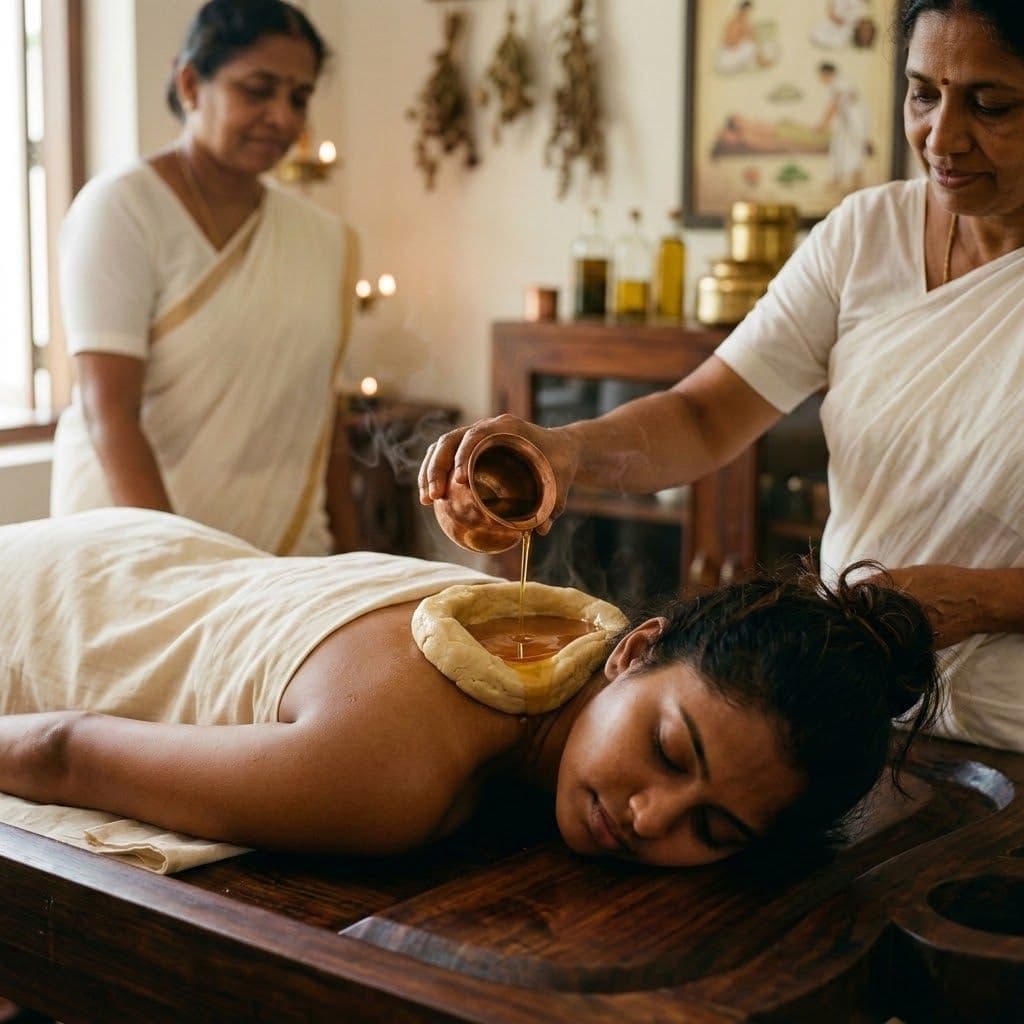
Griva Basti is a special treatment for the neck. It uses warm, soothing oils to calm and heal the neck area. This helps with pain, stiffness, and nerve problems.
Griva Basti represents a highly specialized, localized Snehana-Swedana (oleation-fomentation) therapy designed to deliver targeted Shamana to the cervical spine (Griva), effectively mitigating localized neuromuscular imbalances, structural degeneration, and chronic nociceptor activation.
Key Health Benefits
A. Cervical Neuromuscular Rehabilitation (Griva-Sthairya)
- How: Warm oils are put on the neck.
- Why: This fixes the neck's lubrication and calms Vata, stopping stiffness and nerve pain.
- Mechanism: Direct, localized hyperthermic application of medicated lipid formulations (e.g., Prasarinyadi Taila or Ksheerabala Taila) to the cervical region [2].
- Ayurvedic Rationale: Restores the depleted Sleshaka Kapha within the facet joints and suppresses the Ruksha (dry) quality of pathological Vyana Vayu, thereby alleviating chronic neck stiffness, nerve root compression, and cervical radiculopathy [2].
D. Rejuvenation and Anti-Aging of Musculoskeletal Tissues (Rasayana)
- How: Oils go deep into tissues.
- Why: This helps bones and nerves, slowing down aging and fixing the body.
- Mechanism: Nourishment of deeper tissue systems (Dhatus) through localized Griva Basti.
- Ayurvedic Rationale: Direct transport of lipophilic active constituents to Asthi (bone) and Majja (marrow/nervous tissue) stimulates osteoblastic activity and supports myelin sheath integrity. This slows down age-related degenerative changes, prevents osteophyte formation, and enhances overall vitality.
How it Works (Procedure Steps)
Phase 1: Purva Karma
- Patient Preparation: The patient is thoroughly evaluated for indications and contraindications. A gentle localized Abhyanga (massage) using Prasarinyadi Taila is performed on the neck and shoulder region, followed by mild localized Swedana (fomentation, such as Patra Pinda Swedana) to open the cutaneous Srotas.
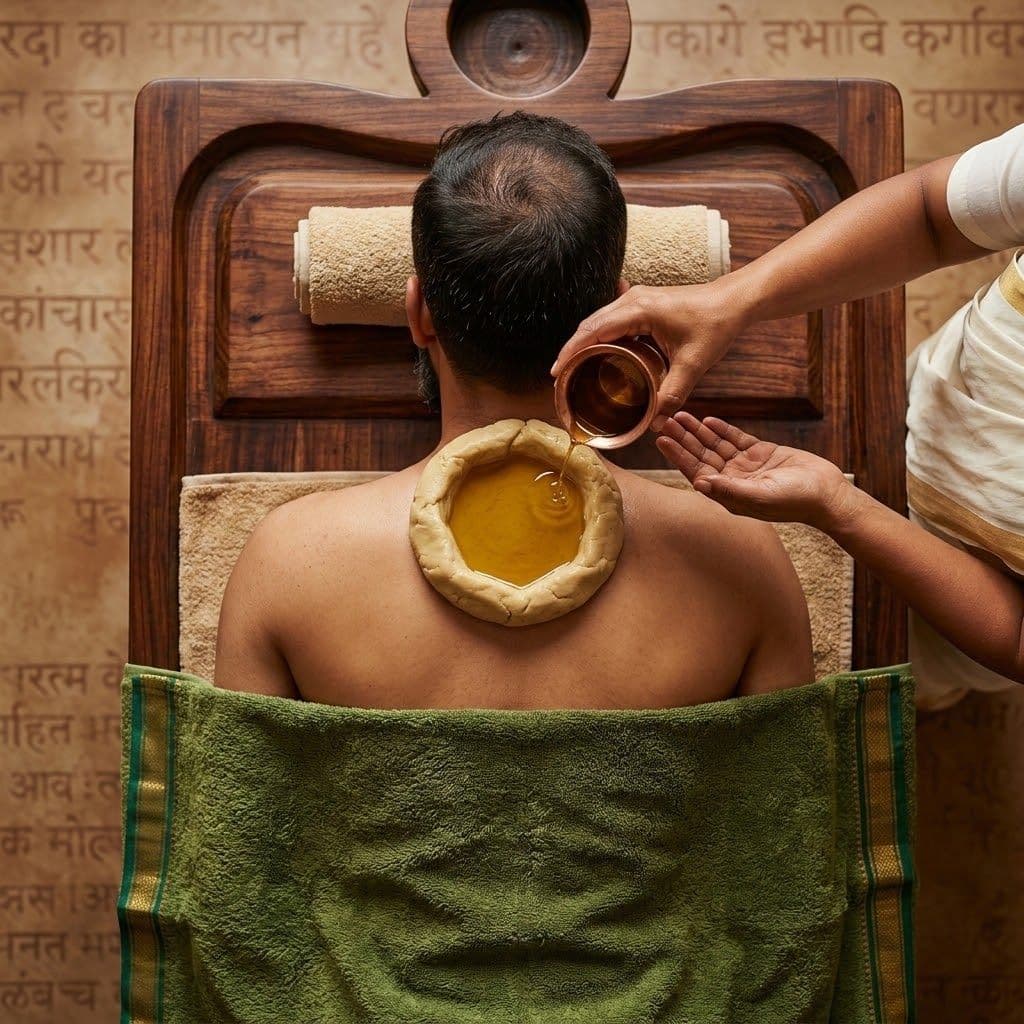
- Preparation of the Dough Reservoir: Paste is prepared by mixing Masha Churna (black gram flour) with lukewarm water, kneading it until it reaches a thick, leak-proof consistency.
- Medicine Preparation: The selected medicated oil (e.g., Ksheerabala Taila, Mahanarayana Taila, or Sahacharadi Taila) is indirectly heated in a water bath to a temperature of approximately 40°C–44°C.
Phase 2: Pradhana Karma
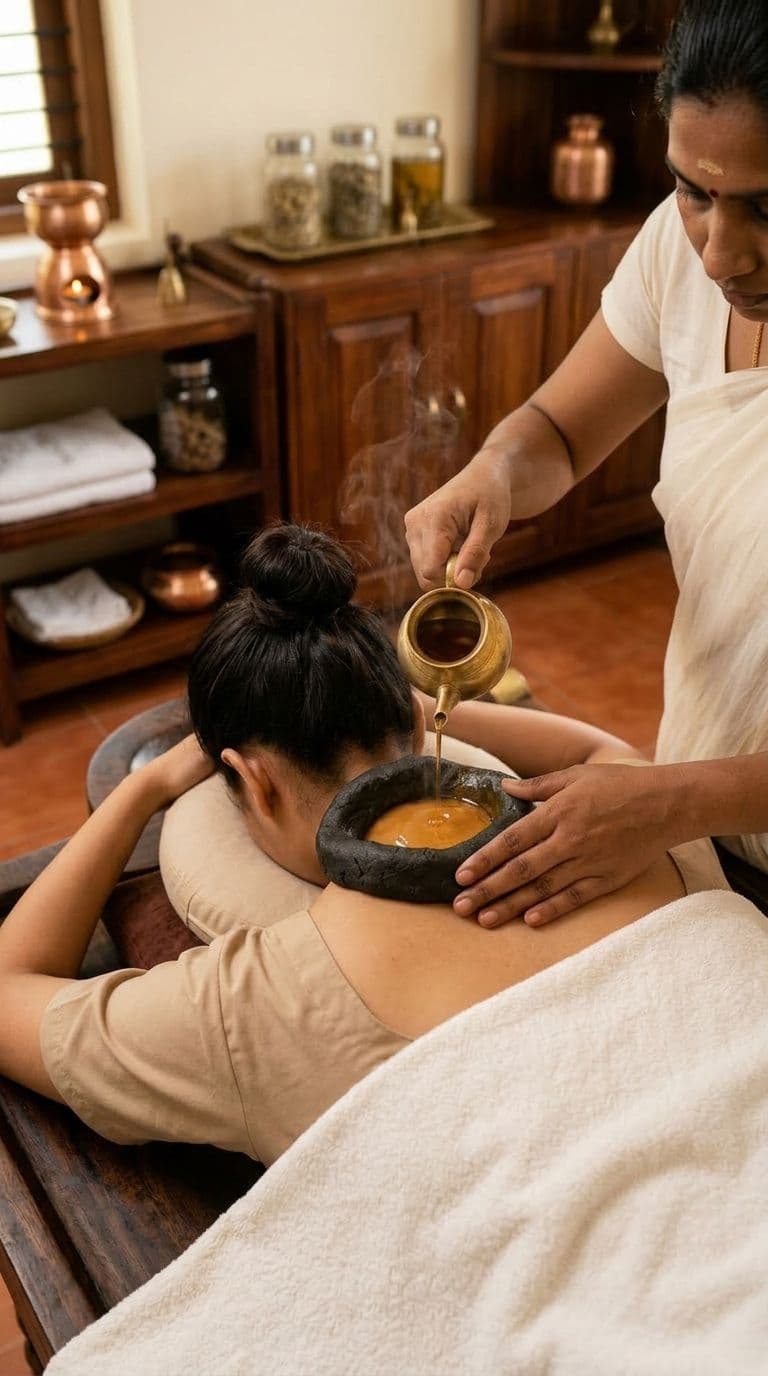
- Positioning: The patient is asked to lie prone on the massage table, with their head resting comfortably on a specialized headrest or pillow to expose the cervical spine.
- Reservoir Application: The black gram paste is molded into a circular or oval reservoir and placed securely over the cervical region (covering vertebrae C1 to C7). The edges are sealed using wet fingers to prevent any leakage of oil.
- Oil Pouring & Retention: The warm medicated oil is poured slowly into the reservoir along the inner wall to prevent sudden thermal shock. The oil level is maintained at a depth of about 1 to 1.5 inches.
- Temperature Maintenance: As the oil cools, it is carefully aspirated using a syringe or cotton gauze and replaced with fresh, warm oil. This temperature-regulated pooling is maintained continuously for 30 to 45 minutes.
- Sub-massage: Gentle digital strokes are applied over the surrounding trapezius and shoulder muscles to facilitate deeper absorption and relieve myofascial tension.
Phase 3: Paschat Karma
- Removal: The oil is carefully siphoned off, and the dough reservoir is removed. The cervical region is gently massaged in an upward direction, followed by a warm, damp towel wipe to clean the skin surface.
- Rest & Protection: The patient is advised to rest in a supine or lateral position for 15 minutes and avoid direct exposure to air conditioning, drafts, or sudden neck movements.
- Samsarjana Krama (Dietary Graduation): For patients undergoing systemic Virechana or Basti, a highly structured post-purification dietary regimen is implemented to rekindle the digestive fire (Agni):
यथाणुरग्निर्द्विसचैन्धनैश्च संधुक्ष्यमाणो भवति क्रमेण... तथा विशुद्धस्य जनस्य पेयादिभिर्हानिबलानुपूर्व्या।— Sushruta Samhita, Sutrasthana 44/90-91 [763]
English Translation: "Just as a tiny spark of fire is gradually built up into a blazing flame by adding small twigs and dry leaves step by step, the digestive fire (Agni) of a patient purified through Shodhana must be carefully built up using a graduated diet starting from thin rice water (Peya), thick rice gruel (Vilepi), unseasoned soup (Akrita Yusha), to seasoned soup (Krita Yusha)." \
- Parihara Vishaya (Behavioral Restrictions): Patients must strictly avoid loud speaking, prolonged sitting, vehicle riding, anger, grief, exposure to cold wind, and sleeping during the daytime (Diva-svapna).
Best Suited For
Griva Basti is indicated for individuals presenting with the following clinical, constitutional, and lifestyle profiles:
A. Specific Clinical Conditions
- Cervical Spondylosis & Disc Prolapse: Regenerative disk disease accompanied by osteophyte formation, cervical radiculopathy, and nerve root impingement.
- Spasmodic Torticollis (Wry Neck): Acute or chronic unilateral contraction of the sternocleidomastoid muscle.
- Myofascial Pain Syndrome: Presence of active myofascial trigger points within the upper trapezius, levator scapulae, and splenius capitis muscles .
- Chronic Ankylosing Spondylitis: Early-stage spinal stiffness and localized pain.
- Tension-Type Headaches & Cervicogenic Vertigo: Secondary to cervical spine stiffness and suboccipital muscle compression.
B. Constitutional (Prakriti) Profiles
- Vata-dominant Prakriti: Individuals highly prone to dryness, structural degeneration, neurological hypersensitivity, and osteopenia [4].
- Vata-Pitta dual-constitutions: Patients exhibiting concurrent structural wear-and-tear (Vata) along with localized inflammatory flare-ups (Pitta).
C. Modern Lifestyle Stressors
- Tech Neck (Computer Vision Syndrome Spine): Chronic postural strain of the posterior cervical muscles due to prolonged use of computers and mobile devices.
- Sedentary Desk Occupations: Long-term static loading of the cervical and thoracic spine leading to early spinal degeneration.
Avoid If (Contraindications)
While highly therapeutic, these procedures are contraindicated in several clinical scenarios. Practitioner discretion is necessary to prevent adverse events.
A. Local Contraindications for Griva Basti
- Acute Cervical Trauma or Fracture: Suspected spinal instability, acute whiplash injury, or undiagnosed spinal fractures.
- Localized Dermatological Infections: Active eczema, psoriasis, open wounds, or pustular acne over the C1-C7 anatomical zone.
- Active Spinal Malignancy or Tuberculosis (Pott’s Disease): Risk of accelerating neoplastic spread or structural collapse.
- Severe Local Inflammation: Acute infective arthritis of the cervical facet joints.
B. Systemic Contraindications for Shodhana (Basti & Virechana)
- Pregnancy and Active Menstruation: Risk of inducing uterine contractions or altering pelvic blood flow.
- Acute Pyrexia (Jwara): Shodhana is contraindicated when Ama is highly active systemically.
- Severe Dehydration & Cachexia: Extremely debilitated individuals or those with severe electrolyte imbalances.
- Ulcerative Colitis & Active Gastrointestinal Hemorrhage: High risk of exacerbating mucosal irritation.
How does Griva Basti works?
A. How the Body Works (Ayurveda Basics)
Griva Basti and cleansing treatments work by fixing problems with Vata and Pitta.
- Balancing Doshas: The neck is controlled by Vyana Vayu (movement energy) and Sleshaka Kapha (lubrication). Too much dry Vata makes the neck hurt and stiff. Griva Basti adds warm oils to fix this.
- Tissue and Channel Health: Neck pain happens when tiny channels get blocked and tissues get weak. Oils in Griva Basti go deep to fix bones and nerves, clearing the blocks.
- Stopping the Problem: Warm oils and gentle pressure in Griva Basti soften tight muscles and help blood flow, fixing the neck problem.
B. How It Works in the Body
Mixing old Ayurveda with new science shows how these treatments work:
- Muscle Relaxation and Blood Flow: Warm oils (40°C–44°C) on the neck relax muscles and help blood flow, fixing hurt disks.
- Skin Medicine: Oils with plant medicines go through the skin to stop swelling in joints and nerves.
Conclusion
Griva Basti and systemic Shodhana therapies demonstrate the clinical depth of Integrative Ayurvedic Medicine [1, 2]. By combining localized physical therapy (Shamana) with systemic detoxification (Shodhana), these treatments effectively target both the structural symptoms and systemic causes of neuromuscular degeneration [2, 4].
Whether addressing chronic cervical spondylosis, relieving postural strain from modern computer use, or restoring systemic neurological balance, these classical therapies offer a safe, non-invasive, and evidence-based approach to patient care [2, 4].
Through the precise application of Snehana and Swedana, these therapies clear micro-channel blockages (Srotoshodhana) and restore structural equilibrium (Samyatva), helping patients regain painless spinal mobility and long-term musculoskeletal health.
Frequently Asked Questions
Q1: Can Griva Basti be performed safely during the menstrual cycle?▼
Griva Basti (localized neck retention) can generally be performed during menstruation if the patient does not experience severe systemic cramping or heavy bleeding. However, systemic Shodhana (such as medicated rectal enemas / Basti and purgation / Virechana) is strictly contraindicated during active menstruation, as it can disrupt Apana Vayu and worsen pelvic congestion.
Q2: How does systemic Basti administered via the rectum relieve pain in the neck?▼
In classical Ayurveda, the colon is the primary seat of Vata Dosha (Pakvashaya) [4]. Systemic Basti directly pacifies Vata at its origin, halting the systemic degenerative cascade (Dhatu Kshaya) [4]. From a modern perspective, rectal administration of lipids and herbal decoctions stimulates enteric nervous system receptors, modulates spinal cord nociception, and downregulates pro-inflammatory cytokines, relieving localized pain in distant joints like the cervical spine.
Q3: What is the recommended frequency and duration of a Griva Basti clinical course?▼
For moderate-to-severe cervical spondylosis, a continuous course of 7, 14, or 21 days is recommended, depending on the severity of the Vata vitiation [2]. Each session should last between 30 to 45 minutes [2]. For chronic degenerative conditions, this course should ideally be repeated every six months.
Q4: Which oils are best suited for Griva Basti in high-inflammatory (Pitta) vs. high-stiffness (Kapha) presentations?▼
In cases dominated by severe burning pain and inflammation (Pitta), Ksheerabala Taila or Dhanwantaram Taila (processed with milk and anti-inflammatory herbs) is preferred. When muscle stiffness, heaviness, and limited range of motion (Kapha) predominate, Sahacharadi Taila or Karpasastyadi Taila (possessing warmer, more penetrating qualities) is highly effective.
Q5: How soon can a patient expect functional improvement in neck mobility following the therapy?▼
Mild cases of muscular spasm often show improvement within the first 3 days of therapy. For chronic structural degenerative conditions like cervical disc herniation, noticeable improvement in range of motion and reduction in radicular pain typically occur by the 7th day of a continuous treatment protocol [2].
Medical Reviewer

Syed Aman Hussain
BAMS, MD
Dr. Syed Aman Hussain is a dedicated Ayurvedic physician specializing in the ancient science of detoxification and rejuvenation. An alumnus of the highly esteemed Ayurvedic and Unani Tibbia College, Government of NCT of Delhi, he holds a degree in Bachelor of Ayurvedic Medicine and Surgery (BAMS).