Ved Club
Back to Medicines
Ayurvedic Formulation

Vati and Gutika: Traditional Ayurvedic Tablets

Ref: Bhavaprakasha (Dipaniya Varga), Rasa Ratna Samuccaya, Charaka Samhita (Chikitsa Sthana 15/16), Ayurvedic Formulary of India (Part I, Vol. I)

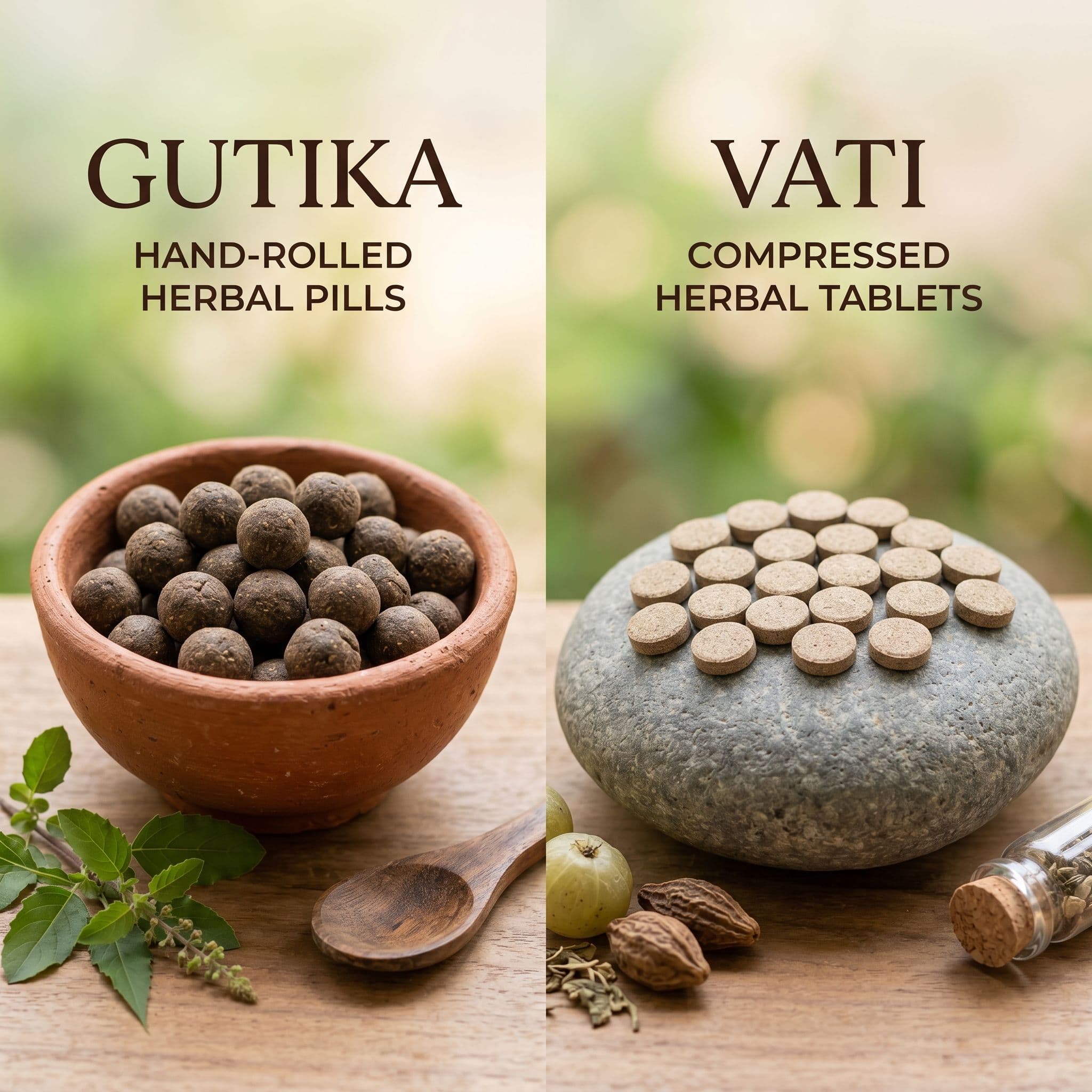
Vati and Gutika are traditional Ayurvedic tablets prepared by grinding herbs, minerals, or animal products into a smooth paste and rolling them into non-sticky pills. These formulations offer extended shelf life compared to loose powders and are used to treat digestive disorders, respiratory conditions, liver/spleen diseases, and neuro-psychiatric imbalances. Key ingredients like Triphala, Guduchi, and Mandur Bhasma work synergistically to balance Agni (digestive fire), detoxify the body, and support vitality. Store in airtight containers—plant-based tablets last ~2 years, while mineral-based ones remain potent indefinitely if kept dry.

Coming Soon to Store

Vati and Gutika: Traditional Ayurvedic Tablets image

Indications & Uses

Vati and Gutika are indicated for:

  • Digestive disorders: Bloating, sluggish digestion (Kapha imbalance), diarrhea, dysentery, malabsorption (Grahanī).
  • Respiratory conditions: Bronchitis, rhinitis, chronic cough (Kāsa), asthma (Śvāsa).
  • Liver/spleen disorders: Hepatitis (Kāmalā), anemia (Pāṇḍu), ascites (Udara).
  • Neuro-psychiatric conditions: Anxiety, speech disorders, memory loss (Unmāda), epilepsy (Apasmāra).
  • Metabolic support: Acid reflux (Amlapitta), diabetes (Prameha), and obesity (Sthoulya).

Note: Formulations like Arogyavardhini and Shiva Gutika are often used as adjuncts to primary therapies.

Key Ingredients

Key ingredients in Vati and Gutika formulations:

  • Triphala (Haritaki, Bibhitaki, Amalaki): Gentle laxative, antioxidant, and rejuvenator. Supports colon health and regular bowel movements.
  • Guduchi (Tinospora cordifolia): Immune-modulating herb. Supports liver function and detoxification.
  • Marica (Black Pepper) & Pippali (Long Pepper): Stimulate Agni (digestive fire), enhance bioavailability of other herbs.
  • Saindhava (Rock Salt): Stimulates appetite, aids digestion, and balances electrolytes.
  • Mandur Bhasma (Iron Ash): Provides bioavailable iron for blood health. Used in anemia and fatigue.
  • Kajjali (Mercury-Sulfur Compound): Traditional detoxifier and rejuvenator. Used in small, purified doses under supervision.
  • Neem Seed, Bakain Seed, Dragon’s Blood Resin: Anti-inflammatory, hemostatic (stops bleeding), and wound-healing properties.
  • Gomutra (Cow Urine Distillate): Supports kidney function and electrolyte balance.
  • Gud (Jaggery): Provides energy, aids digestion, and masks bitter tastes in formulations.

Note: Ingredients like Kajjali and Mandur Bhasma require strict purification processes (Shodhana) as per Ayurvedic pharmacopeia.

Dosage & Anupana

Dosage varies by formulation, condition, and practitioner guidance. General guidelines:

Common Formulations and Dosages

  • Abhayā Vatī: Chronic fever, liver disorders, anemia. Dose: 60 mg with 12 g Haritaki powder in rice water.
  • Arka Vatī: Weak digestion, low appetite (Kapha imbalance). Dose: 125 mg with warm water.
  • Arśoghnī Vatī: Hemorrhoids (bleeding/non-bleeding). Dose: 125–500 mg with water.
  • Kuṭajaghana Vatī: Diarrhea, dysentery, malabsorption. Dose: 250–500 mg with cold water.
  • Jvaraghnī Guṭikā: Fevers. Dose: 1 g with fresh Tinospora juice.
  • Drākṣādi Guṭikā: Acid reflux, heartburn, vertigo. Dose: 6–12 g (often as a sweet confection).
  • Bolādi Vatī: Menstrual irregularities, painful periods. Dose: 150–500 mg with Jaṭāmāṃsī decoction.
  • Vyoshadi Vatakam: Respiratory disorders (bronchitis, cough). Dose: 250–500 mg with honey or warm water.
  • Shiva Gutika: Liver/spleen disorders. Dose: 250–1000 mg with Triphala Kashaya or Guduchi Kwatha.
  • Manasamitra Vatakam: Neuro-psychiatric conditions. Dose: 125–250 mg with milk or ghee.
  • Arogyavardhini: Liver detoxification, skin health. Dose: 250–500 mg with warm water.

Anupana (Vehicles for Administration): The liquid used to take the tablet enhances its effect:

  • Warm water: General use.
  • Honey (Madhu): Enhances absorption, soothes throat.
  • Milk (Ksheera): Nourishing, used for neuro-psychiatric formulations.
  • Ghee (Ghrta): Lubricates tissues, enhances potency for Vāta disorders.
  • Decoctions (Kwatha/Kashaya): E.g., Triphala Kashaya, Dashamoola Kashaya. Targets specific conditions (e.g., liver, respiratory).

Precautions: Always consult an Ayurvedic practitioner before use, especially for:

  • Pregnancy, lactation, or pediatric use.
  • Formulations containing mercury (Kajjali), iron bhasma, or alkalines (Kshara).
  • Chronic diseases (e.g., diabetes, hypertension).

Historical Context and Formulation

Vati and Gutika trace their origins to classical Ayurvedic texts like the Bhavaprakasha (under Dipaniya Varga, digestive tonics) and Rasa Ratna Samuccaya. 12th-century Kerala manuscripts describe early Gutika Churna preparations combining herbs with Saindhava (rock salt) and Mandur Bhasma to kindle Agni (digestive fire). Modern preparations follow these principles, ensuring potency and bioavailability.

How Ingredients Work Together

The ingredients in Vati and Gutika are selected for their synergistic effects:

  • Warming spices (e.g., Marica (black pepper), Pippali (long pepper)) stimulate Agni, improving digestion and nutrient absorption.
  • Triphala (Haritaki, Bibhitaki, Amalaki) acts as a gentle laxative and antioxidant, supporting regular bowel movements and cellular health.
  • Guduchi (Tinospora cordifolia) modulates immunity and aids liver detoxification.
  • Mandur Bhasma (iron ash) provides bioavailable iron for blood health, while Saindhava (rock salt) stimulates appetite.

Modern research supports these effects: piperine (from black pepper) enhances nutrient absorption by 30–200%, while Triphala’s polyphenols exhibit antioxidant activity comparable to vitamin C.

Clinical Applications

Vati and Gutika are prescribed for a range of conditions:

  • Digestive disorders: Arka Vati for sluggish digestion (Kapha imbalance), Kutajaghana Vati for diarrhea/dysentery.
  • Respiratory conditions: Vyoshadi Vatakam for bronchitis, rhinitis, and cough.
  • Liver/spleen disorders: Shiva Gutika (with Triphala Kashaya, Dashamoola Kashaya) for hepatitis and anemia.
  • Neuro-psychiatric conditions: Manasamitra Vatakam for intelligence, speech disorders, and mental clarity.
  • Metabolic support: Arogyavardhini for liver detoxification and skin health.

Dosage and Administration

Dosage varies by formulation and condition. General guidelines:

  • Digestive/Respiratory Vati: 125–500 mg, 1–2 times daily with warm water, honey, or decoctions (e.g., Triphala Kashaya).
  • Liver/Spleen Support: 250–1000 mg, typically with Guduchi Kwatha or Bala Kashayam.
  • Neuro-Psychiatric: 125–250 mg with milk or ghee (e.g., Manasamitra Vatakam).

Note: Always consult an Ayurvedic practitioner for personalized dosage, especially for formulations containing mercury (Kajjali) or iron bhasma.

Storage and Shelf Life

Proper storage ensures potency:

  • Plant-based tablets: Store in airtight containers, away from moisture. Shelf life: ~2 years.
  • Mineral-based tablets: Keep completely dry. Shelf life: indefinite if stored correctly.
  • Avoid humidity for tablets containing sugar, salt, or alkaline ingredients (Kshara).

Quality check: Discard tablets if color, smell, taste, or texture changes.

Frequently Asked Questions

What are Vati and Gutika?

Vati and Gutika are traditional Ayurvedic tablets or pills made by grinding herbs, minerals, or animal products into a smooth paste and rolling them into small, non-sticky pills. This form ensures longer shelf life compared to loose powders and easier dosing. They are used to treat digestive disorders, respiratory conditions, liver/spleen diseases, and neuro-psychiatric imbalances.

How are Vati and Gutika prepared?

The preparation involves:

  • Drying and powdering plant ingredients (e.g., Triphala, Guduchi).
  • Processing minerals into Bhasma (e.g., Mandur Bhasma, Kajjali) through Shodhana (purification).
  • Triturating (grinding) the ingredients with a liquid (e.g., water, Gomutra, decoctions) until a smooth, non-sticky paste forms.
  • Rolling the paste into small pills and drying them in shade or sun.

Note: For sugar/jaggery-based pills (e.g., Drākṣādi Guṭikā), the base is heated to a syrup stage before mixing with herbal powders.

How should Vati and Gutika be stored?

Storage guidelines ensure potency and safety:

  • Plant-based tablets: Keep in airtight containers, away from moisture. Shelf life: ~2 years.
  • Mineral-based tablets: Store in a dry place. Shelf life: indefinite if kept dry.
  • Avoid humidity for tablets with sugar, salt, or alkaline ingredients (Kshara).

Quality check: Discard if tablets change in color, smell, taste, or texture.

Are there any side effects of Vati and Gutika ?

When used under professional guidance, Vati and Gutika are generally safe. However:

  • Formulations with mercury (Kajjali) or heavy metals require strict purification and should only be taken under supervision.
  • Overdose may cause digestive discomfort, nausea, or headaches.
  • Avoid during pregnancy, lactation, or for children without professional advice.

Note: Always source from reputable manufacturers and consult an Ayurvedic practitioner for personalized guidance.

Can Vati and Gutika be taken with modern medicines?

Caution is advised when combining Ayurvedic tablets with modern medications:

  • Avoid concurrent use with antidiabetic or antihypertensive drugs without supervision (risk of hypoglycemia/hypotension).
  • Formulations with iron (Mandur Bhasma) may interact with tetracycline or quinolone antibiotics.
  • Consult an Ayurvedic doctor for safe combinations and monitoring.

Tip: Maintain a 2-hour gap between Ayurvedic tablets and allopathic medicines unless advised otherwise.

How do Vati and Gutika support digestive health?

Vati and Gutika enhance digestive health through multiple mechanisms:

  • Stimulating Agni (digestive fire): Ingredients like Marica (black pepper), Pippali (long pepper), and Saindhava (rock salt) kindle Agni, improving metabolism and nutrient absorption.
  • Balancing doshas: Formulations like Arka Vati reduce Kapha (heaviness, mucus), while Kutajaghana Vati pacifies Pitta (inflammation, acidity).
  • Detoxification: Triphala and Guduchi clear Ama (metabolic toxins) and support liver/kidney function.
  • Microbiome support: Ingredients like Vidanga and Neem have antimicrobial properties that promote gut health.

Modern correlation: Studies show piperine (from black pepper) increases digestive enzyme secretion by 30–50%, aligning with Ayurvedic claims of Agni enhancement.

Are there specific Vati formulations for liver health?

Yes, several Vati and Gutika formulations are renowned for liver support:

  • Shiva Gutika: Contains Triphala Kashaya, Dashamoola Kashaya, and Guduchi Kwatha. Used for hepatitis (Kāmalā), jaundice, and anemia. Dose: 250–1000 mg with decoctions.
  • Arogyavardhini: A multi-herb blend with Kutki (Picrorhiza kurroa), Bibhitaki, and Shilajit. Supports liver detoxification, fatty liver, and skin disorders. Dose: 250–500 mg with warm water.
  • Abhayā Vatī: Contains Haritaki, Pippali, and Borax. Used for chronic fever, liver cirrhosis, and splenomegaly. Dose: 60 mg with Haritaki powder in rice water.

Mechanism:
These formulations:

  • Enhance bile flow and reduce liver inflammation (studies on Guduchi and Kutki show hepatoprotective effects).
  • Support gluthathione production (e.g., Triphala’s antioxidants).
  • Aid in fat metabolism (e.g., Shilajit in Arogyavardhini).

Reviewed By

Syed Aman Hussain

Reviewed By

Syed Aman Hussain

BAMS, MD

View Profile →
Book Consult