Ved Club
Back to Medicines
Ayurvedic Formulation

Ghrita (Sneha-Kalpa)

Ref: Aṣṭāṅgahṛdayam, Kalpasthāna; Carakasamhitā, Kalpa-sthāna

Ghṛta (Sneha‑Kalpa) is a medicated ghee made in Ayurveda. A herbal paste is mixed with a large amount of clarified butter (ghee). This mixes both fat‑soluble and water‑soluble plant ingredients into the fat. The resulting ghee helps the body absorb the herbs more easily. Traditionally it is used to aid digestion, boost appetite, support the skin, and improve overall strength. Modern research shows that such lipid‑based medicines can act as natural drug‑delivery systems, helping the active parts of herbs reach the body more effectively [1].

Coming Soon to Store

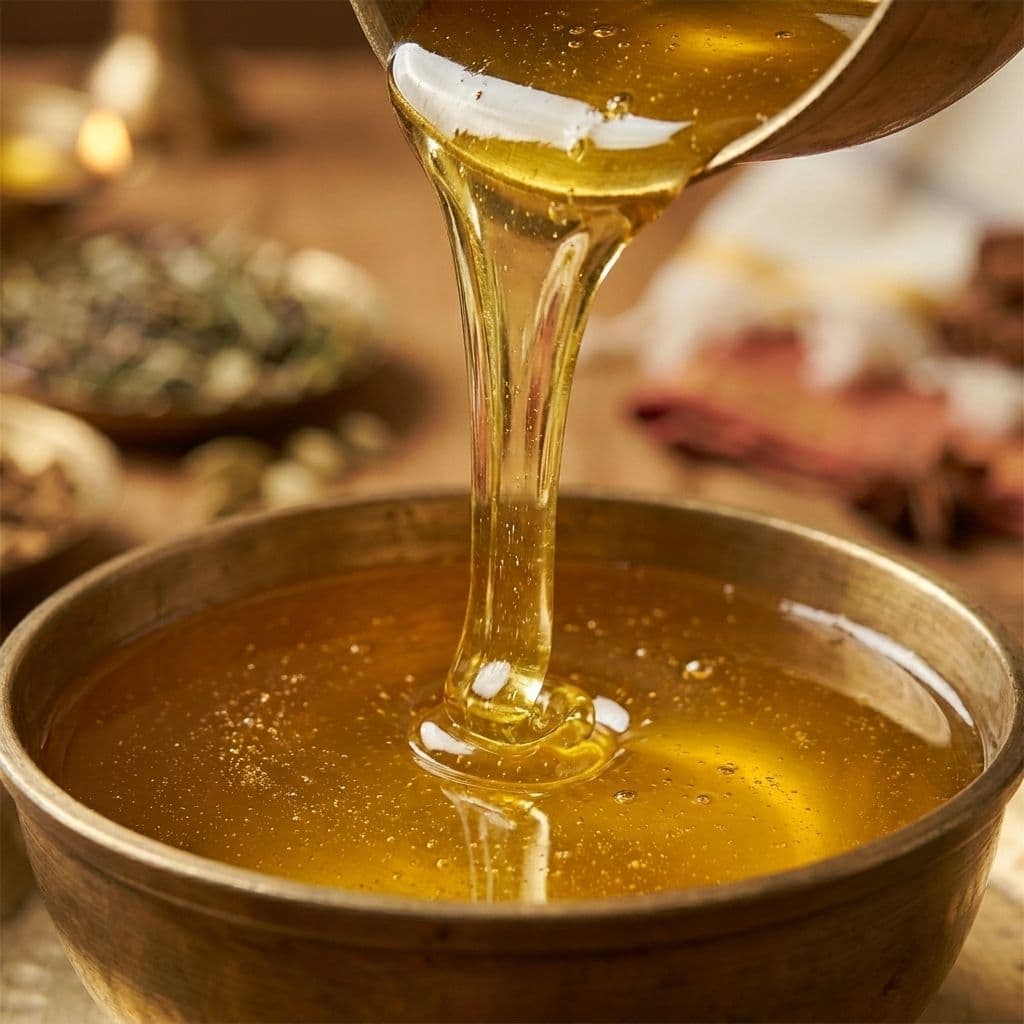
Ghrita (Sneha-Kalpa) image

Indications & Uses

Indigestion & Low Appetite (Agni Māndya):Stimulates digestive fire, improves appetite and nutrient uptake.

General Weakness & Low Immunity (Rasāyana):Acts as a tonic to support longevity, memory and natural defenses.

Skin Disorders (Kustha/Twak Roga):Helps clear the blood and moisturize skin from within.

Wound Healing (Vraṇa):Applied topically or taken orally to speed healing and calm inflammation.

Key Ingredients

Go-ghṛta (cow ghee)— Source: Bos taurus — Role: Main carrier (sneha dravya)

Herbal paste (Kalka)— Source: Various herbs — Role: Provides the active medicines (1 part)

Liquid media (Drava)— Source: Decoctions, milk or juice — Role: Helps extract herbs (4 parts)

Dosage & Anupana

Dose:6 g – 12 g (about 1–2 teaspoons) for adults, or as advised by a qualified practitioner.

Anupana (vehicle):Warm water or warm milk to aid digestion and absorption.

Timing:Take after the previous meal is fully digested.

Caution:People with high cholesterol or obesity should consult a practitioner before use.

How the Ingredients Work

Cow ghee is sweet, cooling and unctuous. It fuels the digestive fire and nourishes the body’s tissues. When herbs are cooked into the ghee, their fat‑soluble parts dissolve into the butter. This creates a “carrier” that moves the herb’s qualities deep into the body. The formula can aid digestion, increase appetite, soothe the gut lining, and give skin and hair a healthy shine. Depending on the added herbs, it may also calm Vata‑Pitta imbalances, support joints, or aid gentle detoxification.

Modern Scientific View

Ghee contains short‑chain fatty acids (like butyric acid), medium‑chain triglycerides, and vitamins A, D, E, K. Butyric acid feeds cells that line the colon and helps keep the gut healthy. The fatty base improves the absorption of lipophilic (fat‑loving) plant compounds, making them more bioavailable. Research has found that ghee can reduce inflammation, balance cytokines and support antioxidant defenses. It also supplies conjugated linoleic acid (CLA), which may aid metabolic health [2].

Teamwork of Ghee and Herbs

The unctuous ghee pacifies Vata and Pitta while gently kindling Agni (digestive fire). Herbs add their specific tastes, energies and post‑digestive effects, which the ghee then carries into the tissues. Together they aim to:

  • Balance Agni
  • Nourish Rasa and Rakta (plasma and blood)
  • Strengthen Ojas (vital immunity)
  • Improve skin, hair and joint health

Regular use may help maintain comfortable digestion, steady energy and a sense of well‑being.

Rasayana (Rejuvenative) Action

When prepared with specific herbs, ghṛta is called a Rasayana — a tonic that promotes longevity, vitality and stress resistance. The rich, nourishing ghee replenishes deep tissues, while the herbs provide antioxidant and adaptogenic support. Modern studies suggest that ghee can help cellular health and modulate stress pathways, matching the traditional view of Ghṛta as a rejuvenative aid [3]. This is not a cure for disease but a support for overall resilience.

Storage

Keep the ghṛta in a clean, airtight glass or food‑grade container. Store in a cool, dry place away from sunlight and moisture. Close the lid tightly after each use to prevent rancidity.

Disclaimer:This article is for educational purposes only. It does not replace professional medical advice. Always consult a qualified healthcare provider before using any medicinal product.

Frequently Asked Questions

What is GHṬA (SNEHAKALPA)?

It is a traditional Ayurvedic medicine made by mixing a herbal paste with clarified butter (ghee). The process extracts both fat‑soluble and water‑soluble plant parts into the fat base [1].

What are the main ingredients?

The base is cow ghee (Goghritha). Herbal paste (Kalka) supplies the active medicines, and a liquid medium (decoction, milk, or juice) helps draw out the plant compounds [1].

How is it prepared?

Typically, the fat medium is used in a 4:1 ratio to the herbal paste. The paste is made by grinding herbs with or without water, then simmering it with the ghee until the desired consistency is reached [1].

What conditions can it help?

Ghṛta is used to improve digestion, increase appetite, support skin health, aid wound healing, and act as a general rejuvenative tonic. It may also balance body energies (Vata and Pitta) [1].

Are there scientific studies on this type of medicine?

Yes. Recent research looks at size‑reduction and nanonization techniques to make lipid‑based Ayurvedic products more stable and potent [4].

What safety checks are needed?

A qualified Ayurvedic physician should verify the identity, purity and freshness of all raw materials. Ingredients must be free of insects, foreign matter and spoilage. If a specific herb is unavailable, permitted substitutes listed in Ayurvedic texts may be used [5].

Reviewed By

Syed Aman Hussain

Reviewed By

Syed Aman Hussain

BAMS, MD

View Profile →
Book Consult