Ved Club
Back to Medicines
Ayurvedic Formulation

Arśoghnī Vatī

Ref: Siddhayogasaṅgraha, Arśodhikāra: 10:3

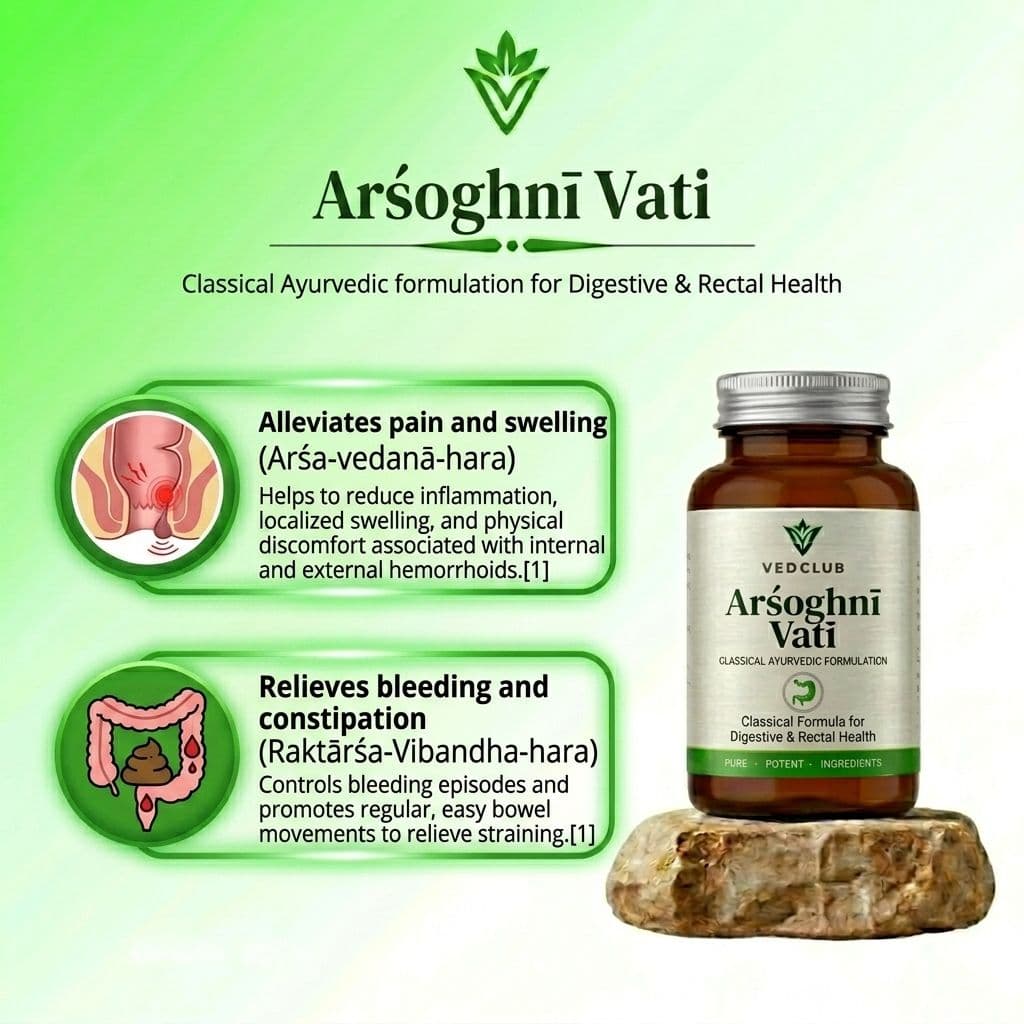
Arśoghnī Vatī is a traditional Ayurvedic tablet formulated to treat piles (hemorrhoids). It effectively stops bleeding, alleviates pain and swelling, and relieves constipation. The formulation includes neem fruit and seed, Persian lilac seed, Khūnakharābā, amber, and purified Berberis aristata extract.

Coming Soon to Store

Arśoghnī Vatī image

Indications & Uses

  • Bleeding piles (Raktārśa): Stops rectal bleeding, often within 1–3 days of regular use.
  • Dry piles (Śuṣkārśa): Reduces hemorrhoid size and eases discomfort.
  • Rectal inflammation & pain: Lessens burning, swelling, and sharp pain.
  • Chronic constipation (Vibandha): Helps soften stools and promotes smoother bowel movements.

Key Ingredients

  • Nimbaphala (Neem seed) – Azadirachta indica: 24 g
  • Mahānimba (Bakain seed) – Melia azedarach: 24 g
  • Khūnakharābā (Dragon’s-blood resin) – Daemonorops draco: 24 g
  • Trṇakanta piṣṭi (Kaharubā) – Amber/Succinite: 48 g
  • Śuddha rasauta (Purified Daruharidra) – Berberis aristata extract: 144 g

Dosage & Anupana

  • Take 1 to 2 tablets (125–500 mg) twice or three times daily with water.
  • Store in an airtight container in a cool, dry place.
  • The tablets retain potency for up to 2 years.

How the Ingredients Work

The ingredients in Arśoghnī Vatī work synergistically to address piles through a three-part mechanism:

  • Hemostatic Action: Astringents like dragon’s-blood resin and berberine from Berberis aristata help promote blood clotting.
  • Anti-Inflammatory Effect: Neem compounds and cooling amber powder soothe swollen tissues and reduce pain.
  • Digestive Support: The powdered formulation helps soften stools, reducing strain on hemorrhoids.

Modern Scientific Explanation

Neem fruit and seed contain compounds like nimbin and azadirachtin, which exhibit anti-inflammatory and antimicrobial properties. Berberine, derived from Berberis aristata, narrows blood vessels and supports clot formation. Dragon’s-blood resin and amber act as natural astringents, sealing minor cuts and reducing bleeding.

Additional Benefits

Bitter herbs like neem and Berberis aristata are believed to enhance liver function and aid in detoxification. Studies suggest neem may increase antioxidant enzymes, while berberine supports gut microbiota balance, further promoting rectal healing.

Dosage & How to Take

Amount: 125 mg to 500 mg per dose (usually 1–2 tablets).

Frequency: Twice or three times daily.

Vehicle (Anupana): Take with water.

Storage: Keep in an airtight container, cool and dry. The tablets retain potency for up to 2 years.

Tip: Maintain a fiber-rich diet and avoid spicy or heavy foods during treatment. Consult an Ayurvedic practitioner for the appropriate duration of use.

Frequently Asked Questions

What is Arśoghnī Vatī used for?

It is primarily used to treat both bleeding and non-bleeding piles (hemorrhoids). It helps stop bleeding, reduces swelling and pain, and relieves constipation.

How quickly does Arśoghnī Vatī stop bleeding?

Traditional use reports that bleeding is controlled within 1–3 days of regular intake.

What are the main benefits of arshoghni vati?

Stops bleeding, reduces swelling and burning, softens stools to prevent strain, and supports mild detoxification of the gut.

What are the key ingredients of Arshoghni vati?

Neem seed, Persian lilac seed, dragon’s-blood resin, amber, and purified Berberis aristata extract.

How should I take arshoghni vati?

Consume 125–500 mg (1–2 tablets) with water, two or three times a day.

Reviewed By

Syed Aman Hussain

Reviewed By

Syed Aman Hussain

BAMS, MD

View Profile →
Book Consult