Śunṭhī (Dry Ginger)
Botanical: Zingiber officinale| English: Dry Ginger
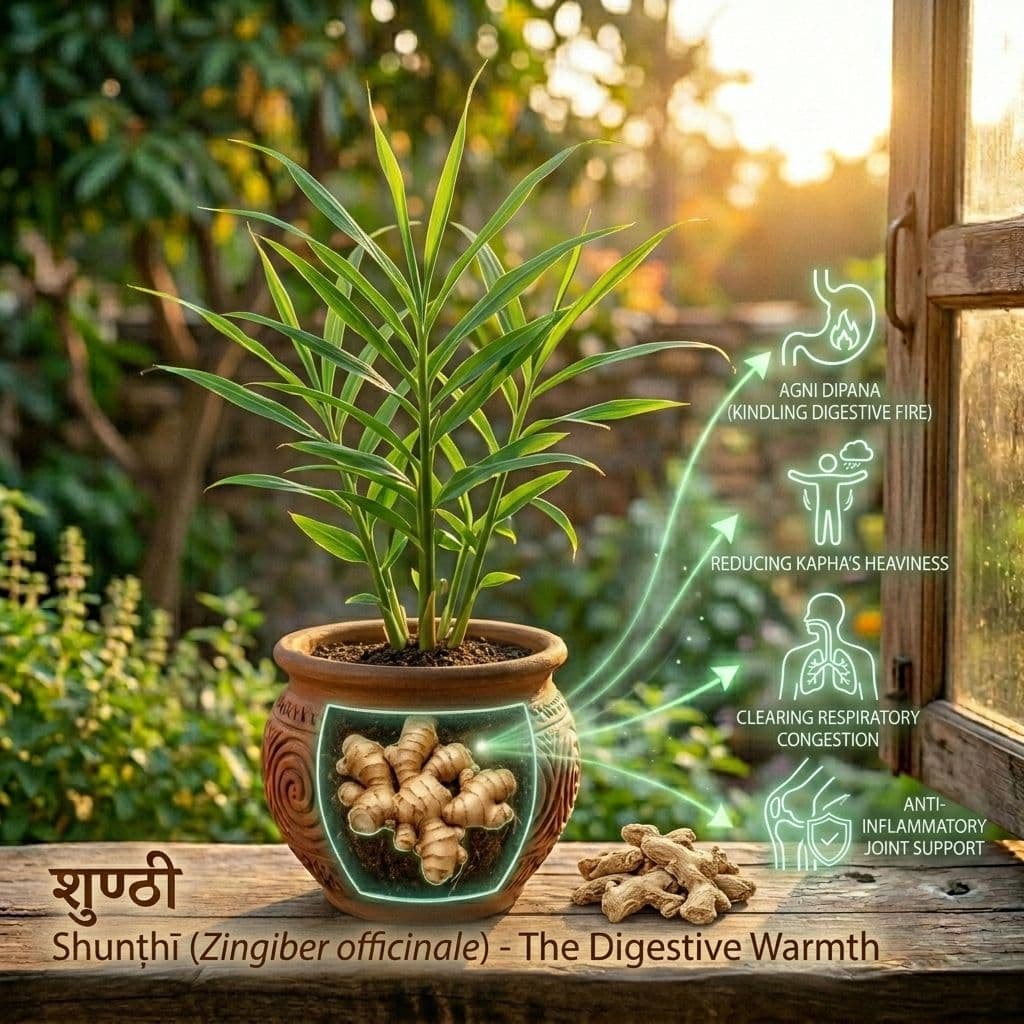
Shunṭhī, or dry ginger, is one of Ayurveda’s most cherished herbs, it is a warm, fiery friend that has been kindling digestive fires and melting away Kapha’s heaviness for centuries. Picture this: a chilly spring morning, your body feeling sluggish, your breath a little congested, and your appetite nowhere to be found. That’s where Śunṭhī steps in, like a cozy cup of spiced tea for your insides. Its pungent, warming nature doesn’t just wake up your digestion; it also helps clear out the cobwebs of congestion, lethargy, and that heavy feeling that often tags along with Kapha season.
Beyond its digestive superpowers, it’s also a gentle ally for your respiratory system. Whether it’s a lingering cough, a touch of breathlessness, or that annoying post-nasal drip, this humble root has a way of loosening things up and helping you breathe easier. And if you’ve ever felt that dull, achy sensation in your joints, especially when the weather turns damp, Śunṭhī’s anti-inflammatory magic might just be the soothing balm your body craves.
Pure Śunṭhī (Dry Ginger) Root Extract
Coming Soon

Top Health Benefits
1A Digestive Fire Starter
If your digestion feels more like a flickering candle than a roaring fire, Śunṭhī is here to fan the flames. In Ayurveda, a strong digestive fire (agni) is the cornerstone of good health, it’s what helps you break down food, absorb nutrients, and keep your energy levels steady. Śunṭhī’s pungent taste and hot potency act like a gentle nudge to your digestive system, encouraging it to wake up and get to work. Whether you’re dealing with a sluggish appetite, that heavy, post-meal slump, or the occasional bout of indigestion, a little Śunṭhī can go a long way in helping your body process food more efficiently.
Modern research backs up what Ayurveda has known for ages: ginger stimulates gastric motility and enzyme secretion, which means it helps move things along in your digestive tract while also breaking down food more effectively. So, if you’ve ever felt like your meals just sit in your stomach like a brick, Śunṭhī might be the digestive sidekick you’ve been missing.
2Kapha Reducing agent
Kapha dosha, with its cold, heavy, and sticky qualities, can leave you feeling like you’re moving through molasses, especially during the spring season. That’s where Śunṭhī shines. Its hot, sharp, and drying nature is like a breath of fresh air for Kapha-dominant folks, helping to melt away congestion, lethargy, and that stubborn feeling of heaviness. Think of it as a natural decongestant for your body and mind.
One of the most beloved ways to harness Śunṭhī’s Kapha-balancing powers is through Sunthi Siddha Jala that is ginger-infused water that’s sipped throughout the day. A recent study found that participants who drank this medicated water daily during the spring season experienced significant relief from Kapha-related symptoms like cough, breathlessness, lethargy, and even excessive sleepiness. It’s like giving your body a gentle spring cleaning, helping to clear out the cobwebs and make space for lighter, brighter energy.
3A Breath of Fresh Air for Your Lungs
If you’ve ever dealt with a lingering cough, a stuffy chest, or that annoying feeling of breathlessness, Śunṭhī might just become your new best friend. Its expectorant properties help loosen mucus and clear out congestion, making it easier to breathe deeply and freely. Whether you’re battling seasonal allergies, a stubborn cold, or just the occasional post-nasal drip, a warm cup of ginger tea can work wonders for your respiratory system.
4Joint Comfort in a Cup
For anyone who’s ever winced at the creak of their knees or felt that dull ache in their joints when the weather turns damp, Śunṭhī offers a glimmer of hope. Its active compounds: gingerols and shogaols are packed with anti-inflammatory and antioxidant properties, which means they can help ease discomfort and support joint mobility. Whether you’re dealing with occasional stiffness or the wear-and-tear of daily life, Śunṭhī’s warming, circulation-boosting effects can help keep your joints feeling more limber and at ease.
Modern research supports what traditional healers have known for centuries: ginger’s anti-inflammatory effects can help modulate the body’s inflammatory pathways, making it a valuable ally for joint comfort. So, if you’re looking for a natural way to support your joints, without reaching for the medicine cabinet, Śunṭhī might just be the answer.
5A Gentle Detox for Your System
In Ayurveda, ama, or toxins: are the sneaky culprits behind many of our modern-day woes, from sluggish digestion to brain fog and even skin breakouts. Śunṭhī’s warming, digestive-stimulating properties help your body process and eliminate ama more efficiently, giving your system a gentle detox without the harshness of extreme cleanses. Think of it as a reset button for your digestion, helping to clear out the gunk and make space for better energy, clearer skin, and a lighter, brighter you.
And because Śunṭhī gently kindles agni without overheating your system, it’s a great choice for seasonal transitions, like when winter’s heaviness gives way to spring’s freshness. It’s like giving your body a little nudge to adapt, helping you glide into the new season with ease.
Ayurvedic Properties
How to Consume?
Sunthi Siddha Jala (Ginger-Infused Water):
- Mix: Start your day with a simple yet powerful ritual: Sunthi Siddha Jala. Boil 1 teaspoon of dry ginger powder in 2 cups of water for about 5 minutes, then let it steep for another 5.
- Strain, and sip this warm, spiced water throughout the day. It’s like a gentle hug for your digestion, helping to kindle agni, melt away Kapha’s heaviness, and keep your energy flowing smoothly.
2. Ginger Tea for Digestion:
- Brew: After a heavy meal, brew yourself a cup of ginger tea to help your digestion along. Simply steep ½ teaspoon of dry ginger powder (or a few thin slices of fresh ginger) in hot water for 5-10 minutes.
- Add a drizzle of honey or a squeeze of lemon for extra flavor and digestive support. Sip slowly and let the warmth work its magic.
Golden Milk for Joint Comfort:
- Warm: For a soothing bedtime ritual that supports joint comfort and relaxation, try golden milk with Śunṭhī. Heat 1 cup of milk (or a plant-based alternative) with ½ teaspoon of dry ginger powder, a pinch of turmeric, and a dash of black pepper.
Let it simmer for 5 minutes, then strain and sweeten with a little honey. Sip this creamy, warming drink before bed and let its anti-inflammatory goodness work its way into your joints.
Ginger Powder for Seasonal Support:
- Stir: During seasonal transitions, like when winter’s chill gives way to spring’s freshness, stir ¼ to ½ teaspoon of dry ginger powder into a cup of warm water.
- Add a pinch of rock salt or a squeeze of lemon for extra digestive support. Drink this first thing in the morning to help your body adapt to the changing weather and keep your agni burning bright.
Side Effects & Cautions
- Things to Keep in Mind: While Śunṭhī is generally safe and well-tolerated, it’s always wise to listen to your body. Because of its heating nature, it may not be suitable for those with excess Pitta (think: acid reflux, skin rashes, or a tendency to overheat). If you’re pregnant, nursing, or on blood-thinning medications, it’s best to check with your healthcare provider before making Śunṭhī a regular part of your routine.
- Rare but Possible Reactions: In rare cases, some people may experience mild side effects like a rash, itching, or swelling of the lips, tongue, or throat. If you notice any of these symptoms, discontinue use and consult a healthcare professional. Ginger may also increase bleeding tendency, so if you’re on blood-thinning medications, it’s important to talk to your doctor before using Śunṭhī regularly.
- Start Slow: If you’re new to Śunṭhī, start with a small amount, which should be like ¼ teaspoon of powder in warm water and see how your body responds. Everyone’s body constitution is unique, so what works wonders for one person might not suit another. Pay attention to how you feel, and adjust your dosage accordingly.
Frequently Asked Questions
Is Śunṭhī suitable for people with sensitive stomachs?▼
Absolutely! In fact, Śunṭhī is often recommended in Ayurveda for those with sensitive digestion because of its gentle yet supportive nature. Unlike some herbs that can be harsh or irritating, Śunṭhī’s warming qualities help soothe the stomach while also stimulating digestion. It’s like a comforting pat on the back for your digestive system, encouraging it to work more efficiently without overwhelming it.
Are there any side effects or precautions I should know about?▼
Śunṭhī is generally safe and well-tolerated, but like any herb, it’s important to use it mindfully. Because of its heating nature, it may not be suitable for those with excess Pitta: think acid reflux, skin rashes, or a tendency to overheat. If you’re pregnant, nursing, or on blood-thinning medications, it’s best to check with your healthcare provider before using Śunṭhī regularly.
Does Śunṭhī cause allergic reactions?▼
Like any herb, Śunṭhī has the potential to cause allergic reactions in some people, though it’s relatively rare. Signs of an allergic reaction might include a rash, itching, swelling of the lips, tongue, or throat, or even digestive discomfort. If you experience any of these symptoms, discontinue use and consult a healthcare professional.
Scientific References
- Verywell Health. Ayurveda: Benefits, Side Effects, and More.
- Journal of Neonatal Surgery. Sunthi Siddha Jala (Ginger medicated water) as a Preventive Seasonal Intervention for Kapha-Related Disorders: Evidence from a Randomized Controlled Trial.
- Pharmaceutical Standardization of Shunthi (Zingiber officinale).
Article Reviewed By

Syed Aman Hussain
BAMS, MD
Dr. Syed Aman Hussain is a dedicated Ayurvedic physician specializing in the ancient science of detoxification and rejuvenation. An alumnus of the highly esteemed Ayurvedic and Unani Tibbia College, Government of NCT of Delhi, he holds a degree in Bachelor of Ayurvedic Medicine and Surgery (BAMS).