Madar (Arka)
Botanical: Calotropis gigantea (L.) W.T.Aiton / Calotropis procera (Aiton) Brahma| English: Maddar / Giant Milkweed / Swallow-Wort
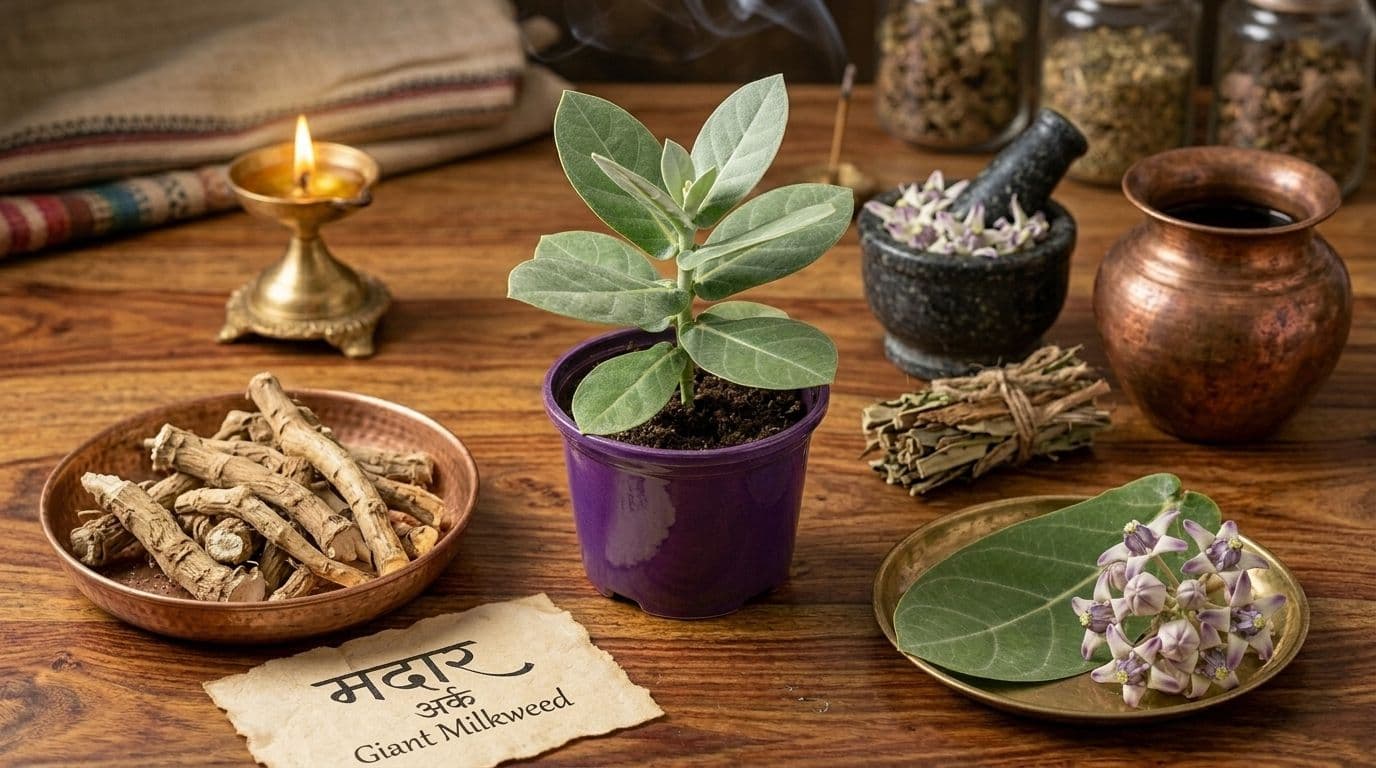
Madar (Arka), botanically known as Calotropis gigantea and Calotropis procera, is a powerful medicinal plant used extensively in Ayurveda. Known for its potent Kaphahara (Kapha-reducing) properties.
Madar is traditionally employed to treat skin disorders, respiratory conditions, digestive issues, and pain. Its latex, roots, leaves, and flowers are all utilized in classical Ayurvedic formulations. Due to its highly potent and toxic nature, it is used only in carefully processed (Shodhita) forms under expert guidance.
Pure Madar (Arka) Root Extract
Coming Soon

Top Health Benefits
1Supports Respiratory Health
Madar is traditionally used in Ayurveda to treat cough, asthma, and bronchitis. Its Kaphahara property helps clear excess mucus from the respiratory tract, making breathing easier.
2Aids in Skin Disease Management
The latex and root bark of Madar have been classically used to treat chronic skin conditions such as eczema, psoriasis, and leucoderma. Its Tikshna (sharp/penetrating) quality helps address deep-seated skin disorders.
3Relieves Pain and Inflammation
Madar exhibits analgesic and anti-inflammatory properties. It is used in classical formulations to relieve joint pain, arthritis, and muscular aches. Its Ushna Virya (hot potency) helps pacify Vata-related pain conditions.
4Supports Digestive Health
In Ayurveda, Madar's Katu Rasa and Tikshna Guna stimulate digestive fire (Agni). It is used in formulations for digestive disorders including intestinal worms, constipation, and sluggish digestion when administered in appropriate processed doses.
5Wound Healing Properties
Madar leaves and latex have been traditionally used externally for wound healing. Studies suggest antimicrobial and tissue-regenerating effects that support its classical use in healing ulcers and infected wounds.
6Antimicrobial Activity
Research has demonstrated that Madar extracts exhibit significant antibacterial and antifungal activity. This supports its traditional use in treating infectious skin diseases, dental issues, and as a general antimicrobial agent in Ayurvedic practice.
Ayurvedic Properties
How to Consume?
Madar (Calotropis) is a potent herb classified as a toxic plant in Ayurveda. It must only be used in properly processed (Shodhita) forms under qualified Ayurvedic physician supervision. Self-medication is strongly discouraged.
Classical Ayurvedic Preparations:
Madar Mool Twak Churna (Root Bark Powder): 125–250 mg, once or twice daily with honey or ghee, as directed by a physician.
Arka Patra (Leaf): Used externally as a warm poultice for joint pain and skin conditions.
Arka Ksheer (Latex): Highly toxic internally; used only externally after proper processing in very small amounts under strict guidance.
Classical Formulations Containing Madar: Arkadi Churna, Kankayan Vati, Madar Kshara, all available through licensed Ayurvedic practitioners.
Note: Dosage and form must be determined by a qualified Ayurvedic physician based on individual constitution (Prakriti), disease condition, and severity.
Side Effects & Cautions
Madar is a potent and toxic herb. Strict caution must be exercised at all times.
Toxicity: All parts of the Calotropis plant, especially the latex, are highly toxic if consumed raw or in unprocessed form. It can cause severe burning in the mouth, vomiting, diarrhea, and systemic toxicity.
Skin and Eye Irritation: Direct contact of the latex with eyes or skin can cause severe irritation, corneal damage, and contact dermatitis. Avoid contact with eyes.
Contraindications: Absolutely contraindicated in pregnancy and lactation. Not recommended for children, elderly, or individuals with Pitta-dominant constitution without proper physician supervision.
Drug Interactions: May interact with cardiac medications and other drugs. Always inform your physician about all medications before starting Madar-based preparations.
Never self-administer. Always use only under the guidance of a qualified Ayurvedic practitioner.
Frequently Asked Questions
What is Madar (Arka) used for in Ayurveda?▼
In Ayurveda, Madar (Calotropis gigantea/procera) is used to treat respiratory disorders (cough, asthma), chronic skin diseases, digestive complaints, joint pain, and as an antimicrobial agent. All its parts: root, leaves, flowers, and latex — have therapeutic applications when used in properly processed formulations.
Is Madar (Calotropis) safe to consume?▼
Madar is a highly potent herb with significant toxicity in its raw form. It is only safe when properly processed (Shodhana) according to classical Ayurvedic methods and administered under qualified medical supervision. Raw consumption of any part, especially the latex, is dangerous and should never be attempted.
What does Arka mean and why is Madar called Arka?▼
Arka is the Sanskrit name for Calotropis and also means 'the Sun.' Madar is called Arka because its flowers resemble the rays of the sun and the plant thrives in hot, arid conditions. In Ayurvedic texts, Arka refers specifically to Calotropis gigantea, while Alarka refers to Calotropis procera. Both are used interchangeably in many classical formulations.
Can Madar be used for skin diseases?▼
Yes, Madar has been traditionally used in Ayurveda for chronic skin diseases including eczema, psoriasis, and leucoderma. The root bark and leaves are used in classical formulations. However, the latex must never be directly applied to sensitive skin without proper processing. Always consult an Ayurvedic physician before using Madar for skin conditions.
Which dosha does Madar balance and aggravate?▼
Madar primarily pacifies Kapha dosha (Kaphahara) due to its Katu (pungent) and Tikta (bitter) Rasa, Laghu (light), Ruksha (dry), and Tikshna (sharp) Gunas, and Ushna (hot) Virya. However, due to its heating and drying qualities, it may aggravate Vata dosha (Vatakara) when used in excess or without proper adjuvants (Anupana).
Scientific References
1. Sharma PV. Dravyaguna Vijnana, Vol. II. Varanasi: Chaukhambha Bharati Academy; 2001. pp. 130-134.
2. Kirtikar KR, Basu BD. Indian Medicinal Plants, Vol. III. Allahabad: Lalit Mohan Basu; 1918. pp. 1608-1614.
3. Basu A, Bhattacharya S. Calotropis gigantea R.Br. (Asclepiadaceae): A phytochemical and pharmacological review. Journal of Applied Pharmaceutical Science. 2014;4(5):01-08.
4. Roy S, Sehgal R, Padhy BM, Kumar VL. Antioxidant and protective effect of latex of Calotropis procera against alloxan-induced diabetes in rats. Journal of Ethnopharmacology. 2005;102(3):470-473.
5. Charaka Samhita, Sutrasthana, Chapter 25 – Arka described under Tikta Skandha herbs. Vidyotini Hindi Commentary by Pt. Kashinath Shastri. Varanasi: Chaukhamba Sanskrit Sansthan; 2005.
6. Ashtanga Hridayam, Sutrasthana 15:14 – Properties of Arka (Calotropis gigantea). Chaukhambha Krishnadas Academy, Varanasi.
Article Reviewed By

Syed Aman Hussain
BAMS, MD
Dr. Syed Aman Hussain is a dedicated Ayurvedic physician specializing in the ancient science of detoxification and rejuvenation. An alumnus of the highly esteemed Ayurvedic and Unani Tibbia College, Government of NCT of Delhi, he holds a degree in Bachelor of Ayurvedic Medicine and Surgery (BAMS).