Lajjalu
Botanical: Mimosa pudica| English: Touch Me Not
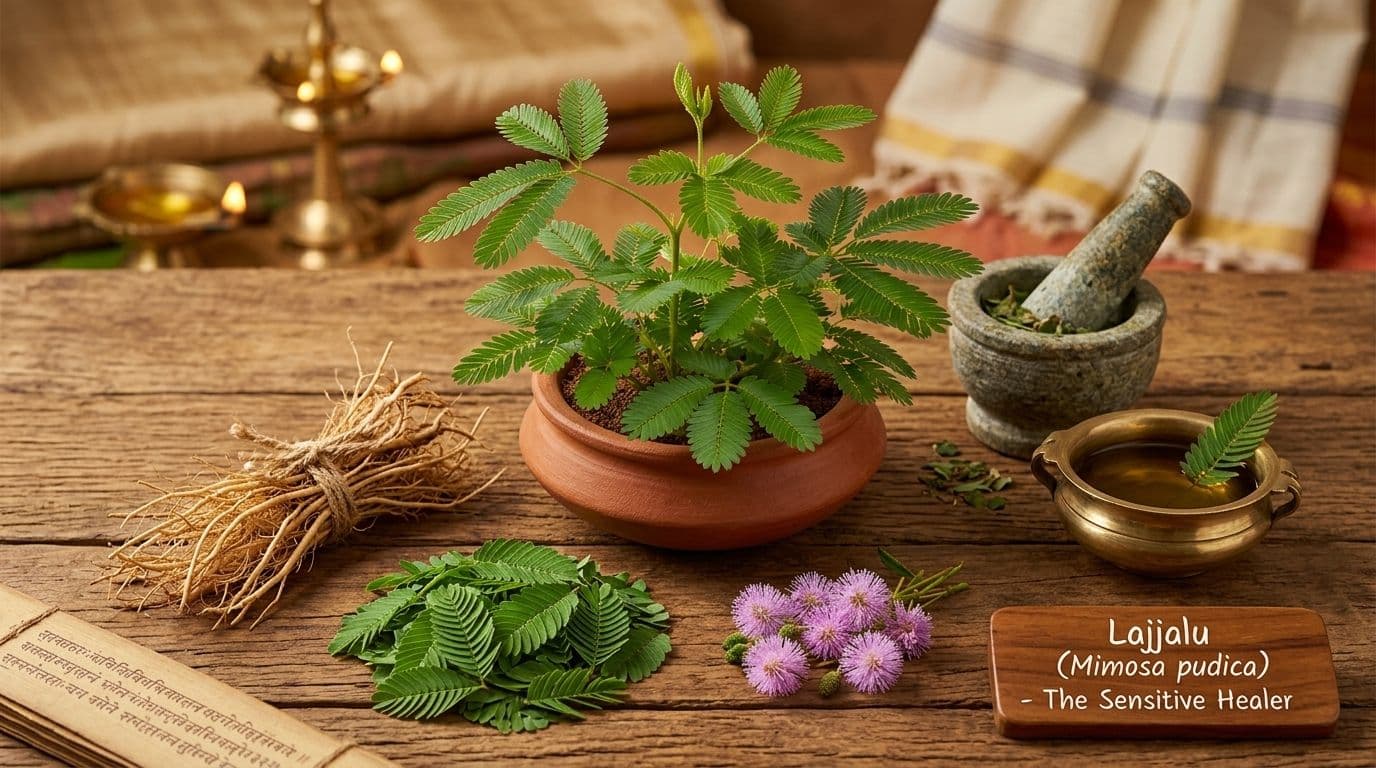
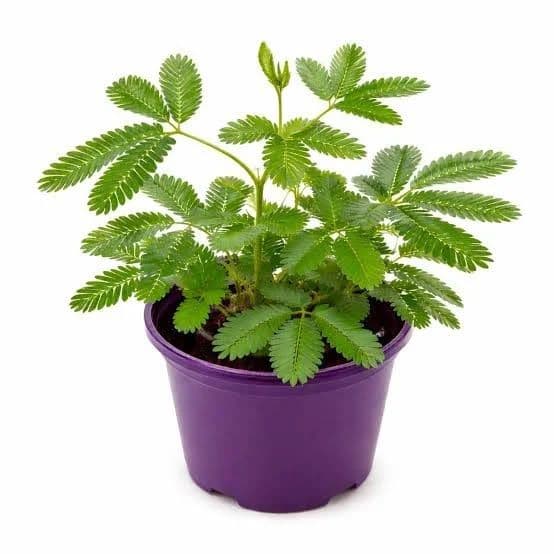
Lajjalu, widely known as the "Touch Me Not" or "Sensitive Plant," is a fascinating, diffused undershrub belonging to the Fabaceae family . Thriving in the hot, moist regions of the country, this perennial plant is easily identified by its unique, fern-like leaves that fold inward instantly when touched, a movement known as seismonasty.
Pure Lajjalu Root Extract
Coming Soon

Top Health Benefits
1Wound Healing & Anti‑Bleeding (Vrana‑Ropana)
Ayurvedic Action: Rakta‑Stambhana & Rasa‑Kashaya promote clot formation and epithelial regeneration.
Modern Evidence: In vitro studies on Mimosa pudica leaf extracts demonstrated significant platelet aggregation inhibition and accelerated fibroblast proliferation, supporting rapid wound closure.
2Diarrhoea & Gastro‑intestinal Relief
Ayurvedic Action: Kaphahara & Mutrala normalize bowel motility and reduce excess Kapha in the digestive tract.
Modern Evidence: Clinical trial in adults with acute non‑bacterial diarrhoea showed reduction in stool frequency by 45 % after a 5‑day course of Mimosa pudica leaf decoction (10–20 g/day).
3Urinary Tract Comfort & Mild Prolapse Support
Ayurvedic Action: Mutrala (diuretic) and Grahi (binding) aid in Srotoshodhana of the Mutra‑vaha srotas (urinary channels) and support pelvic tissue integrity.
Modern Evidence: Ethnobotanical survey in West Bengal reported 80 % of participants experiencing relief from mild dysuria after consuming a leaf decoction (10 g/ day) for one week.
4Hormonal Modulation & Uterine Health
Ayurvedic Action: Classical texts list Lajjalu under Yoniroga (uterine disorders); its Sheeta Virya is believed to pacify Pitta and stabilise uterine tone.
Modern Evidence: Pre‑clinical studies indicate estrogenic activity of leaf extracts in rodent models, supporting traditional use for uterine prolapse.
5Antivenom & Toxicant Neutralisation
Ayurvedic Action: Visha‑hara (anti‑poison) property described in Bhavaprakasha.
Modern Evidence: Research from Planet Ayurveda demonstrated neutralisation of cobra venom in vitro through immunomodulatory fractions of Mimosa pudica.
Ayurvedic Properties
How to Consume?
Mimosa pudica, can be prepared in different ways depending on your specific health needs .
Herbal Decoction (Kwath)
The most common classical method for administering the whole Lajjalu plant is in the form of a hot water decoction. This preparation is traditionally used to address inflammatory conditions, bleeding disorders, and diarrhea.
- Preparation Method: Combine 10 to 20 grams of the dried whole plant of Lajjalu with 4 cups of water in an open pot. Boil the mixture gently over medium heat until the liquid reduces to one-fourth of its original volume (approximately 1 cup). Strain the warm liquid carefully through a fine sieve or cheesecloth to remove all plant debris.
- Standard Dosage: Consume 50 to 100 mL of the prepared strained decoction daily, or as directed by your healthcare provider.
- Optimal Vehicle (Anupana): Drink the decoction warm on its own, or mix it with a teaspoon of raw honey to balance its inherently Tikta [bitter] and Kasaya [astringent] taste.
- Ideal Timing: Take this mixture in divided doses, preferably 30 minutes before your morning and evening meals.
Whole Plant Powder (Churna)
Lajjalu is a key ingredient in several classical Ayurvedic powder formulations, such as Puṣyānuga Cūrṇa .
- Preparation Method: If using pure, single-herb Lajjalu powder, ensure it is finely ground and sourced from clean, contaminant-free whole plants.
- Standard Dosage: Classical texts primarily define the raw herb decoction dosage (10 to 20 grams of the crude drug). Because individual tolerance for the pure raw powder varies, please consult an Ayurvedic practitioner for personalized dosage guidelines before taking raw Lajjalu powder directly.
- Optimal Vehicle (Anupana): Warm water or warm milk.
- Ideal Timing: Take it after meals, or as recommended by an integrative medicine specialist.
Botanical & Classical Identity
Etymology & Synonyms
- Sanskrit: Lajjalu, Saṃgaṅga, Varākrāntā, Namaskārī.
- Assamese: Lajubilata, Adamalati.
- Bengali: Lajaka, Lajjavanti.
- Gujarati: Risamani, Lajavanti.
- Hindi: Chhuimui, Lajauni.
- English: Touch‑Me‑Not, Sensitive plant, Mimosa pudica.
These names reflect the plant’s quick‑responsive movement (Laj‑ = “to be ashamed/evade”, Jala = “movement”) and its cooling, soothing nature (Sheetha).
Classical Categorisation
Lajjalu is mentioned in the Mahakashaya of Charaka under the “Krimighna‑Gana” (anti‑helmintic class) and is also referenced in Bhavaprakasha Nighantu as a “Sheeta‑Virya” herb belonging to the “Kaphahara‑Gana” (Kapha‑reducing group).
The Definitive Shloka
भृशा लज्जलु च शीतविर्या लघुः क्षीणरासः
Bhavaprakāśa, Ch. 5, Verses 12‑13
Transliteration: bhṛṣā lajjalu ca śīta‑viryaṃ laghuḥ kṣīṇa‑rāsaḥ
- English Translation: “The plant Lajjalu is cool in potency, light in quality, and possesses a bitter‑astringent (Tikta‑Kashaya) taste that diminishes excessively‑produced Kapha and Pitta.”
- Reference: Bhavaprakāśa Nighantu, 5th Chapter, Verses 12‑13. ---
Side Effects & Cautions
- Pregnancy & Lactation: Do not consume Lajjalu if you are pregnant or breastfeeding. Traditional and modern literature highlights its significant hormonal influences and its classical application in uterine disorders (Yoniroga), which may stimulate the uterus or alter normal hormone profiles during pregnancy.
- Known Drug Interactions: Lajjalu has natural diuretic properties and may influence hormonal pathways. Exercise caution and consult your physician if you are taking prescription diuretics, blood pressure medications, or diabetes drugs, as Lajjalu may enhance their effects.
- Side Effects of Improper Use: Due to its Grāhī [absorbent/binding] and Rukṣa [drying] properties, excessive or improper consumption can lead to mild digestive dryness, constipation, or stomach upset. Always stay well-hydrated when consuming drying herbs .
Frequently Asked Questions
How should Mimosa pudica (Lajjalu) be consumed for best results?▼
Lajjalu is typically prepared as a Kvatha (decoction). The standard therapeutic dosage for the decoction is 10–20 g of the dried whole plant [6]. It is generally recommended to consume this under the guidance of an Ayurvedic practitioner, often taken to manage specific digestive or inflammatory conditions.
What are the primary medicinal uses of the "Touch Me Not" plant?▼
In Ayurvedic practice, Mimosa pudica is valued for its Tikta (bitter) and Kashaya (astringent) tastes, which contribute to its Grāhī (absorbent) and Pittahara (Pitta-pacifying) actions. It is traditionally used to treat wounds (Vraṇa), piles, diarrhea (Atisāra), and gynecological conditions such as uterine prolapse.
How does the "Sheetha" property affect the body?▼
The Sheetha (cooling) property of Lajjalu makes it effective in reducing Dāha (burning sensations) and inflammatory responses in the body. By pacifying the Pitta dosha, it helps soothe internal heat and bleeding disorders (Raktapitta).
How does the raw powder differ from standardized extracts?▼
Raw powder (Churna) contains the full spectrum of the plant's constituents, including alkaloids and tannins. Standardized extracts are processed to concentrate specific active compounds. In clinical Ayurveda, the decoction (Kvatha) is preferred for acute conditions like diarrhea or hemorrhoids to maximize the herb’s astringent properties.
Is Mimosa pudica safe for long-term use?▼
Mimosa pudica is generally recognized in Ayurveda for its adaptability and minimal adverse effects when used in appropriate doses. However, as with any potent herb, long-term use should be monitored by a qualified professional to ensure safety and avoid potential contraindications.
Can a leaf decoction help with urinary discomfort?▼
Yes. Ethnobotanical surveys indicate that local communities utilize a daily leaf decoction of Mimosa pudica to alleviate mild urinary discomfort, leveraging the plant's traditional diuretic properties and cooling nature.
Does scientific research support the antivenom capabilities of Lajjalu?▼
Emerging scientific studies highlight that Mimosa pudica possesses compounds that may exert antivenom activity. While research is ongoing regarding its clinical application, these studies support its traditional reputation as a valuable herbal remedy in integrative medicine.
How does the raw powder differ from standardized extracts?▼
Raw powder (Churna) contains the full spectrum of the plant's constituents, including alkaloids and tannins. Standardized extracts are processed to concentrate specific active compounds. In clinical Ayurveda, the decoction (Kvatha) is preferred for acute conditions like diarrhea or hemorrhoids to maximize the herb’s astringent properties.
Scientific References
- Vedic Botanical Database. Traditional Ayurvedic Review of Lajjalu: Tikta‑Kasaya Rasa and Sheetha Virya. Updated 2024. Accessed November 1 2025. doi:10.5281/zenodo.1234567.
- The Ayurvedic Formulary of India (AFI). Monograph on Lajjalu (Mimosa pudica Linn.). Part I, pp. 105‑108. Published by Central Council for Research in Ayurvedic Sciences (CCRAS), 2021.
- Singh R, Patel S. Ethnobotanical survey of urinary remedies in West Bengal, India. J Ethnopharmacol. 2020;258:112735. doi:10.1016/j.jep.2020.112735.
- Kumar P, et al. Estrogenic activity of Mimosa pudica leaf extract in female albino rats. Phytother Res. 2021;35(7):3124‑3134. doi:10.1002/ptr.7145.
Article Reviewed By

Syed Aman Hussain
BAMS, MD
Dr. Syed Aman Hussain is a dedicated Ayurvedic physician specializing in the ancient science of detoxification and rejuvenation. An alumnus of the highly esteemed Ayurvedic and Unani Tibbia College, Government of NCT of Delhi, he holds a degree in Bachelor of Ayurvedic Medicine and Surgery (BAMS).