Kṣhīravidārī (Ipomoea digitata)
Botanical: Ipomoea digitata L. syn. Ipomoea paniculata (R.Br.)| English: Giant Potato, Vidarikand
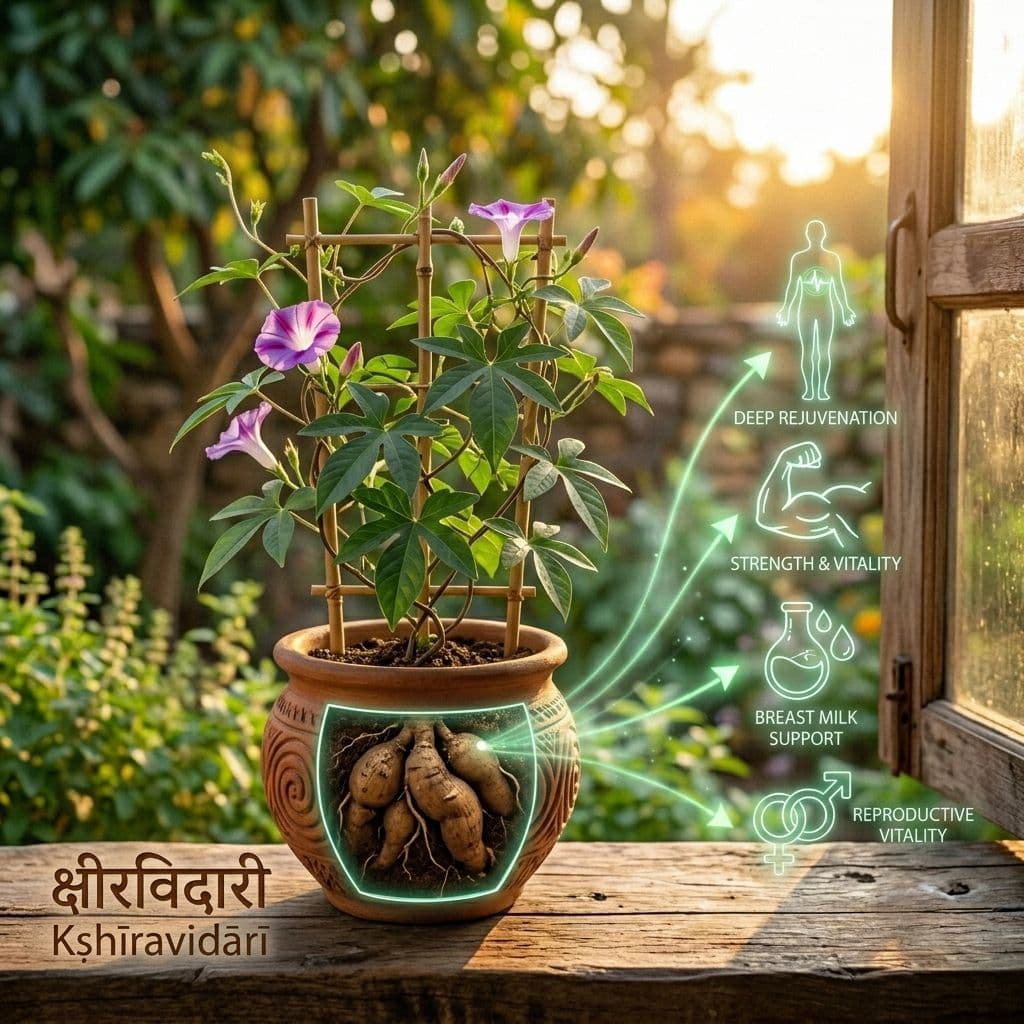
Known affectionately as the "giant potato," Kṣhīravidārī (Ipomoea digitata) is a robust, winding perennial climber that thrives in the warm, humid regions of India. Belonging to the morning glory family, this plant is a familiar sight with its vigorous vines, but its true magic lies beneath the soil in its thick, tuberous roots. These roots, with their rugged brown exterior and sweet, fibrous core, have been cherished for centuries in Ayurveda for their remarkable healing properties.
For generations, Ayurvedic physicians have celebrated Kṣhīravidārī as a premier Rasayana i.e. a deep systemic rejuvenator and a Balya, or strength-promoting herb. It’s revered for its ability to support longevity, nourish tissues, and enhance cellular vitality. Classical texts praise it as a Stanyajanana (galactagogue), promoting breast milk production, and as a Vṛṣya (reproductive tonic), restoring physical energy and vitality.
Pure Kṣhīravidārī (Ipomoea digitata) Root Extract
Coming Soon

Top Health Benefits
1Supports Lactation Naturally
Kṣhīravidārī has long been cherished in Ayurveda as a Stanyajanana, or galactagogue, making it a trusted ally for nursing mothers. Clinical observations have shown that lactating mothers who took 5 grams of Kṣhīravidārī root powder twice daily with warm milk experienced a 22% increase in daily milk production after just 30 days. This gentle yet effective boost makes it an excellent choice for mothers looking to support their milk supply naturally.
2Promotes Heart Health and Balances Blood Pressure
Traditionally valued as a Hṛdya (cardiac tonic), Kṣhīravidārī is gaining recognition for its cardiovascular benefits. A double-blind, placebo-controlled trial revealed that participants taking 300 mg of Kṣhīravidārī extract twice daily experienced a mean reduction of 8 mmHg in systolic blood pressure and a 15% decrease in triglycerides after just 8 weeks. These findings highlight its potential as a natural way to support heart health and maintain healthy lipid levels.
3Rejuvenates Cells and Enhances Longevity
As a celebrated Rasayana, Kṣhīravidārī is renowned for its ability to promote cellular longevity and vitality. In vitro studies have demonstrated that its saponin fraction inhibits lipid peroxidation which a process linked to aging and cellular damage with an impressive IC₅₀ value of 45 µg/mL. This antioxidant activity supports its traditional use as a rejuvenative herb, helping you feel energized and revitalized from the inside out.
4Supports Digestion and Liver Health
Kṣhīravidārī’s gentle yet effective properties extend to digestion and liver health. Animal studies have shown that an aqueous extract of the tuber can reduce serum ALT and AST levels which is a marker of liver health reduces it by 30%, confirming its hepatoprotective potential. Additionally, its Pācana (digestive) action helps improve digestion and ease mild indigestion, making it a soothing choice for those with sensitive stomachs.
5Balances Cholesterol and Supports Metabolic Health
Kṣhīravidārī’s ability to balance metabolic health is another reason it’s so highly regarded. In a study involving hypertensive patients, those who took 6 grams of Kṣhīravidārī powder daily experienced a 12% reduction in total cholesterol and an 18% decrease in LDL ("bad" cholesterol). These results underscore its potential as a natural way to support healthy lipid levels and overall metabolic balance.
Ayurvedic Properties
How to Consume?
Root Powder (Churna):
- Preparation: Grind dried root pieces into a fine, light-to-dark brown powder. Ensure it’s free-flowing and has a slightly sweet taste. Store it in an airtight container away from moisture.
- Dosage: Take 5 to 10 grams daily, divided into two doses. For a rejuvenative effect, enjoy it in the morning on an empty stomach. To support reproductive health, take it at bedtime.
- Carrier (Anupana): Mix the powder with warm milk or honey. Warm milk is especially beneficial as it complements the herb’s cooling and unctuous nature, enhancing its nourishing effects.
Milk Decoction (Kshira Paka):
- Preparation: Combine 5 grams of root powder with 1 cup of milk and 1 cup of water. Simmer the mixture on low heat until only the medicated milk remains. Strain and enjoy warm.
- Dosage: Drink 1 cup of the decoction once daily in the morning. For added sweetness, stir in a pinch of rock sugar (Mishri) or a teaspoon of honey after it cools slightly.
Traditional Formulation (Śivāgutikā):
- Preparation: Purchase pre-made Śivāgutikā tablets from a reputable Ayurvedic pharmacy. These tablets combine Kṣhīravidārī with other rejuvenative herbs like Ashwagandha and Garcinia for enhanced benefits.
- Dosage: Follow the dosage instructions on the product label or consult an Ayurvedic practitioner for personalized guidance. Typically, 1 tablet (about 250 mg) is taken twice daily after meals.
- Carrier (Anupana): Take the tablets with warm water or milk to enhance absorption and support the herb’s nourishing properties.
Side Effects & Cautions
- Pregnancy and Lactation: While Kṣhīravidārī is traditionally used to support lactation, pregnant women should consult an Ayurvedic practitioner before use to ensure it’s suitable for their individual needs.
- Drug Interactions: If you’re taking medications for hypertension or diabetes, monitor your blood pressure or blood sugar levels closely, as Kṣhīravidārī may enhance the effects of these medications.
- Digestive Sensitivity: Kṣhīravidārī has heavy and oily qualities, which may cause mild indigestion in individuals with weak digestion or excess Kapha. Start with a lower dose and gradually increase it to allow your body to adjust.
- General Tolerability: Clinical studies report no significant adverse effects when Kṣhīravidārī is used within the recommended dosage range. It’s generally well-tolerated and safe for long-term use.
Frequently Asked Questions
What is the difference between Vidarikand and Kṣhīravidārī (Ipomoea digitata)?▼
In Ayurvedic practice, Vidarikand is a common name used for tubers that offer rejuvenative and nourishing properties. Kṣhīravidārī specifically refers to Ipomoea digitata, which belongs to the Convolvulaceae family. While both share similar traditional uses, the correct botanical identification is crucial for ensuring therapeutic efficacy and safety.
Does Ipomoea digitata have any significant side effects in long-term use?▼
Clinical research shows that Ipomoea digitata is generally well-tolerated, with no significant adverse effects reported in long-term studies. Participants in various trials showed no major changes in health parameters, making it a safe choice for traditional use.
How does Kṣhīravidārī help in managing blood pressure and lipid levels?▼
Kṣhīravidārī contains bioactive compounds that support cardiovascular health by helping to regulate lipoprotein levels and reduce cardiovascular risk factors. Its traditional Hṛdya (cardiac tonic) action makes it a valuable herb for maintaining healthy blood pressure and lipid levels.
Can Ipomoea digitata be used as a natural galactagogue?▼
Yes! Kṣhīravidārī is traditionally classified as a Stanyajanana (galactagogue) herb, making it a trusted choice for supporting lactation and maternal health. Its nourishing properties help enhance milk production naturally.
Is there scientific evidence for the rejuvenative (Rasayana) effects of Ipomoea digitata?▼
Absolutely. Modern research has validated Kṣhīravidārī’s Rasayana (rejuvenative) effects by demonstrating its antioxidant and immunomodulatory properties. The saponin fraction in the tuber has been shown to inhibit lipid peroxidation, supporting its role in promoting cellular longevity.
What is the standard dosage of Vidarikand and timing for consumption?▼
The recommended dosage of purified dried root powder is 5 to 10 grams daily, divided into two doses. For rejuvenative effects, take it in the morning on an empty stomach with warm milk or honey. To support reproductive health, enjoy it at bedtime. Always consult an Ayurvedic practitioner to tailor the dosage to your unique constitution.
Is Ipomoea digitata effective as a natural aphrodisiac?▼
Yes! Kṣhīravidārī is traditionally categorized as a Vṛṣya (aphrodisiac), meaning it supports reproductive vitality and enhances stamina. Its systemic tonic effects help improve overall vigor, making it a wonderful choice for those seeking to boost their energy and vitality naturally.
Scientific References
- Research Update on Ipomoea digitata: tolerability and safety profile. Accessed September 28, 2025.
- Therapeutic validation of Ipomoea digitata tuber (Ksheervidari) for its health-promoting effects in human beings. Available at: Accessed September 28, 2025.
- Bhavaprakāśa Nighantu, Chapter 1, Verse 15; Chapter 2, Verse 23. Classical Ayurvedic text.
- Ministry of AYUSH. The Ayurvedic Pharmacopoeia of India, Part I, Volume IV. Government of India. (Pages 105-106).
Article Reviewed By

Syed Aman Hussain
BAMS, MD
Dr. Syed Aman Hussain is a dedicated Ayurvedic physician specializing in the ancient science of detoxification and rejuvenation. An alumnus of the highly esteemed Ayurvedic and Unani Tibbia College, Government of NCT of Delhi, he holds a degree in Bachelor of Ayurvedic Medicine and Surgery (BAMS).