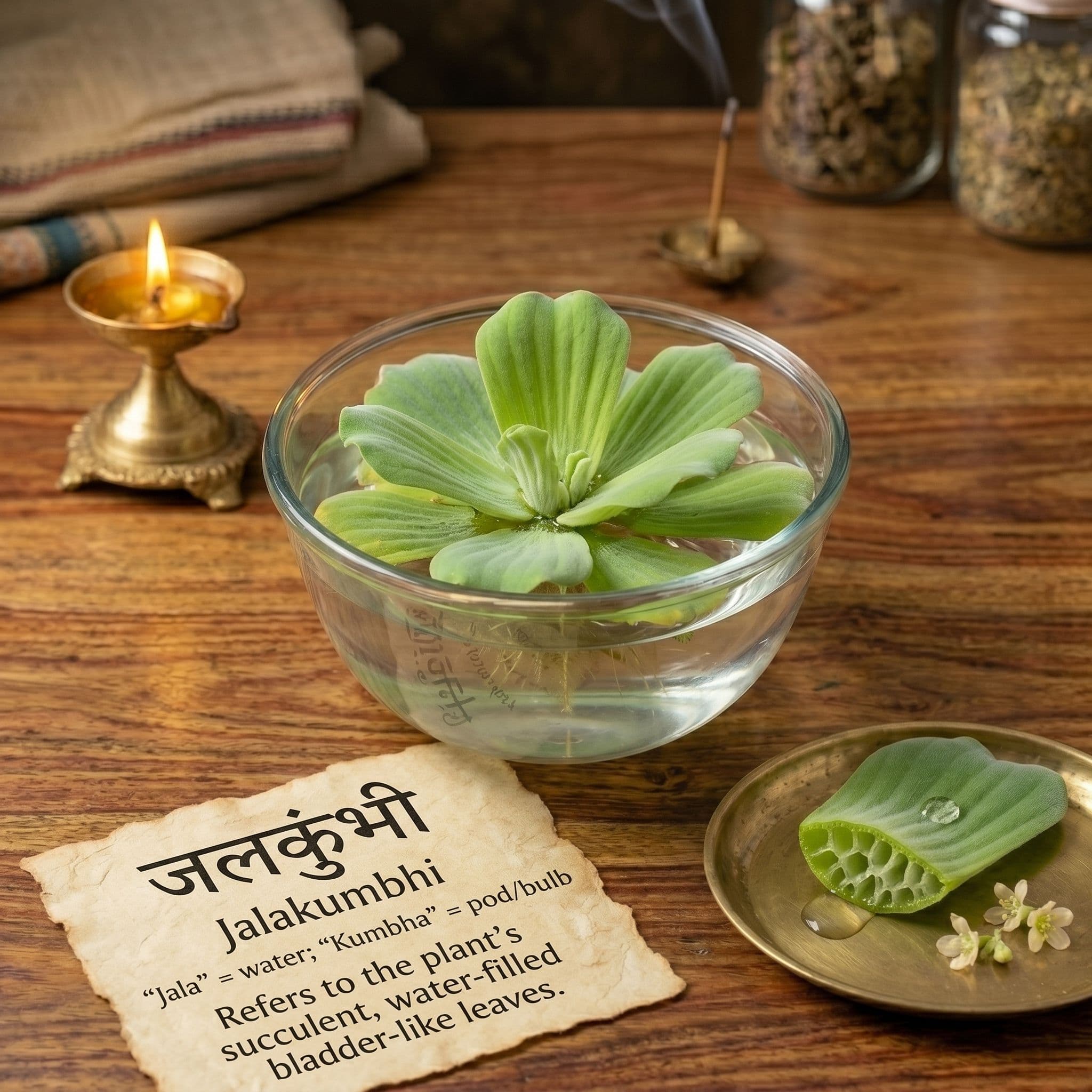
Jalakumbhi (Water Lettuce)
Botanical: Pistia stratiotes L.| English: Water Lettuce
In the tradition of Ayurveda, Jalakumbhi is highly regarded for its Ushna Virya (hot potency) and Tikta-Katu (bitter-pungent) taste, which balance Kapha and stimulate excretory functions. It is traditionally utilized for its Mutrajanana (diuretic) and Sothahara (anti-inflammatory) properties, serving as a Balya (strength-promoting) agent for those suffering from emaciation or systemic weakness.
Its therapeutic applications range from the management of Raktapitta (bleeding disorders) and Arsa (piles) to supporting skin health and urinary tract function, reflecting its role as a Tridosahara (balancer of all three doshas).
Pure Jalakumbhi (Water Lettuce) Root Extract
Coming Soon

Top Health Benefits
1Blood-Purification & Haemorrhagic Disorders (Raktapitta)
Ayurvedic Action: Amadosahara (blood-purifying, removes excess Pitta from the blood).
Modern Evidence: Jalakumbhi's flavonoids (vicenin, lucenin, cyanidin-3-glucoside) provide antioxidant and anti-inflammatory support that validates its traditional role as a Raktashodhaka (blood-cleanser).
2Diuretic & Urinary Tract Health (Mutrakrichchra)
Ayurvedic Action: Mutrala (promotes urine flow and clears obstruction).
Modern Evidence: The herb's alkaloids and flavonoids support renal tubular function and help manage dysuria, urinary tract infections, and kidney stone prevention.
3Thyroid Enlargement & Goitre (Galaganda)
Ayurvedic Action: Sthana-Shodhana (cleansing the channel of thyroid tissue).
Modern Evidence: In-vitro assays demonstrated iodine-modulating activity of flavonoids (beta-sitosterol, stigmasterol), supporting traditional use in goitre management.
Caution: Monitor TSH levels if using levothyroxine concurrently.
4Piles (Arsha) & Constipation
Ayurvedic Action: Kaphaghna + Sothahara (reduces swelling and normalises Vata).
Modern Evidence: The herb's de-obstructive (Sransana) and anti-inflammatory properties help relieve piles, reduce rectal swelling, and normalise bowel movements.
5Skin Disorders (Kushtha)
Ayurvedic Action: Tvak-dosahara (detoxifies skin layers).
Modern Evidence: The phenolics (kaempferol, cyanogenic glycosides) modulate skin-purifying activity and provide antimicrobial and anti-inflammatory effects relevant to managing Kushtha (skin diseases) including eczema, psoriasis, and infected wounds.
Ayurvedic Properties
How to Consume?
Jalakumbhi can be administered in several therapeutic ways depending on your specific health goals and the guidance of your practitioner.
Powder (Churna)
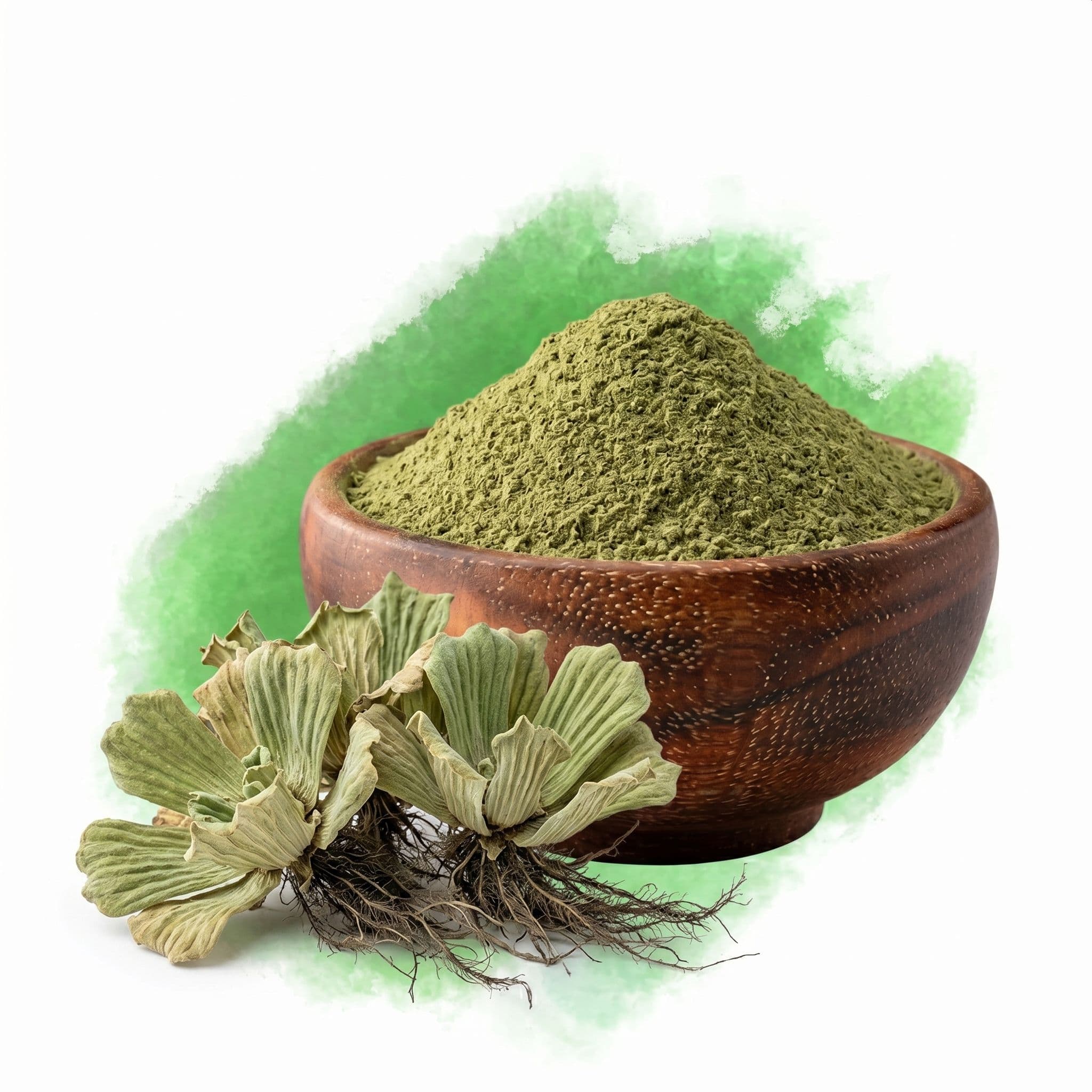
- Preparation Method: Harvest the whole plant from clean, uncontaminated water sources. Thoroughly wash the plant, dry it completely in a shaded area, and grind it into a fine, smooth powder.
- Standard Dosage: Consume 3 to 5 grams of the powder daily.
- Optimal Vehicle (Anupana): Mix the powder into a cup of warm water or lukewarm milk.
- Ideal Timing: Take in two divided doses, once in the morning and once in the evening, after meals.
Fresh Juice (Svarasa)
- Preparation Method: Thoroughly sterilize fresh leaves to eliminate waterborne pathogens. Crush the clean, fresh leaves and squeeze the pulp through a sterile muslin cloth to extract the raw juice.]
- Standard Dosage: Take 10 to 20 ml of fresh juice daily.
- Optimal Vehicle (Anupana): Mix the juice with equal parts of warm water or a teaspoon of raw honey to balance its Sheeta (cold) potency and prevent throat irritation.
- Ideal Timing: Consume first thing in the morning on an empty stomach.
Special Instructions:
- For blood-purifying effect, combine powder with 1/2 tsp ghee before ingestion.
- For thyroid support, take juice with honey for 45 days, followed by a 15-day break.
- Always consume with freshly boiled water to minimise microbial risk.
Safety Shloka (Precautionary Verse)
Jalakumbhīrasaṁsparśaṁ nīrāṇoḥ, raphādhikṣṇaṁ bhavati |Ācārya‑savdhānāni: samyak‑pānaṁ ca, samyak‑pariṣṭā ca.
“Contact with raw Jalakumbhi may cause throat irritation due to crystal spikes; therefore, the wise practitioner must ensure proper processing, correct dosage, and suitable vehicle.”
Reference – Ayurvedic Pharmacopoeia of India, Monograph on Jalakumbhi.
Jalakumbhi (Pistia stratiotes) epitomises the synergy between hydro‑adapted morphology and broad‑spectrum Ayurvedic pharmacology.
Its Tikta‑Katu Rasa, Uṣṇa Virya, and Katu Vipāka drive powerful Kapha‑hara, Mutra‑janaka, and Raktavimoppingaka actions, which modern phytochemistry validates through alkaloids, flavonoids, and sterols possessing antioxidant, anti‑inflammatory, and diuretic activities.
Side Effects & Cautions
- Pregnancy & Lactation: Do not use Jalakumbhi during pregnancy or breastfeeding. Its strong Sara (mobility-inducing/laxative) and Mutrajanana (diuretic) properties may cause unwanted pelvic pressure or fluid imbalances.
- Calcium Oxalate Irritation: The microscopic profile of Jalakumbhi reveals abundant needle-like calcium oxalate crystals (raphides measuring up to 170 um and star-shaped druses).
- Heavy Metal & Pathogen Contamination: Pistia stratiotes is an aggressive bio-accumulator that readily absorbs toxic heavy metals (Pb, Cd, As), chemicals, and industrial runoff from its aquatic environment.
- Known Drug Interactions: Because of its natural Mutrajanana (diuretic) activity, avoid using Jalakumbhi alongside prescription diuretics or blood pressure medications, as it may compound their effects and lead to dehydration or low blood pressure.
- Side Effects of Improper Use: Taking Jalakumbhi in excess or raw can trigger severe gastrointestinal irritation, throat swelling, and vomiting due to its potential Vamaka (emetic/vomit-inducing) actions at high doses.
Frequently Asked Questions
What is Jalakumbhi used for in Ayurveda?▼
Pistia stratiotes is valued in Ayurveda for its Tridosahara (balancing all three doshas) properties. It is primarily used as a Balya (tonic) and Mutrajanana (diuretic). Therapeutically, it is indicated for Arsa (piles), Daha (burning sensation), Galaganda (goitre), Jvara (fever), Kushtha (skin diseases), Mutrakrichchra (dysuria), Sosa (emaciation), and Raktapitta (bleeding disorders).
Can Jalakumbhi be used during pregnancy?▼
Do not use Jalakumbhi during pregnancy or breastfeeding. Its strong Sara (mobility-inducing/laxative) and Mutrajanana (diuretic) properties may cause unwanted pelvic pressure or fluid imbalances that could harm the developing fetus.
Can Jalakumbhi be taken daily?▼
Yes, when prepared as prescribed (3-5 g powder or 10-20 ml juice) and taken with appropriate anupana (carrier/vehicle), Jalakumbhi can be taken daily. However, continuous use should not exceed 90 days without a medical review by a qualified Ayurvedic physician.
How long does it take to notice diuretic effects?▼
A noticeable increase in urine output usually occurs within 24-48 hours of starting the juice (Svarasa) regimen at 10-20 ml per day. For powder (Churna), the diuretic effect may be observed within 2-3 days.
Can Jalakumbhi be combined with other herbs?▼
Jalakumbhi is commonly combined with Punarnava or Gokshura for enhanced urinary health, and with Guduchi (Tinospora cordifolia) for immune and blood-purifying benefits. However, herb combinations should always be made under professional guidance, as interactions can alter potency and onset of effects.
What are the signs of calcium oxalate (oxalate) overdose?▼
Signs of improper consumption or oxalate overdose include tingling or burning in the mouth and throat, swelling of the lips, tongue, and mucous membranes, dysphagia (difficulty swallowing), and occasional vomiting.
Scientific References
1. Kirtikar KR, Basu BD. Indian Medicinal Plants. 2nd ed. Allahabad: Lalit Mohan Basu; 1918.
2. Nadkarni AK. Indian Materia Medica. Mumbai: Popular Prakashan; 1954.
3. The Ayurvedic Pharmacopoeia of India. Part I, Vol. IV. New Delhi: Govt. of India; 2004.
4. Bhavaprakasha Nighantu – Guduchyadi Varga. 5. Dymock W, Warden CJH, Hooper D. Pharmacographia Indica. London; 1890.
Article Reviewed By

Syed Aman Hussain
BAMS, MD
Dr. Syed Aman Hussain is a dedicated Ayurvedic physician specializing in the ancient science of detoxification and rejuvenation. An alumnus of the highly esteemed Ayurvedic and Unani Tibbia College, Government of NCT of Delhi, he holds a degree in Bachelor of Ayurvedic Medicine and Surgery (BAMS).