Brahmi (Bacopa monnieri)
Botanical: Bacopa monnieri| English: Water Hyssop, Thyme-Leaved Gratiola
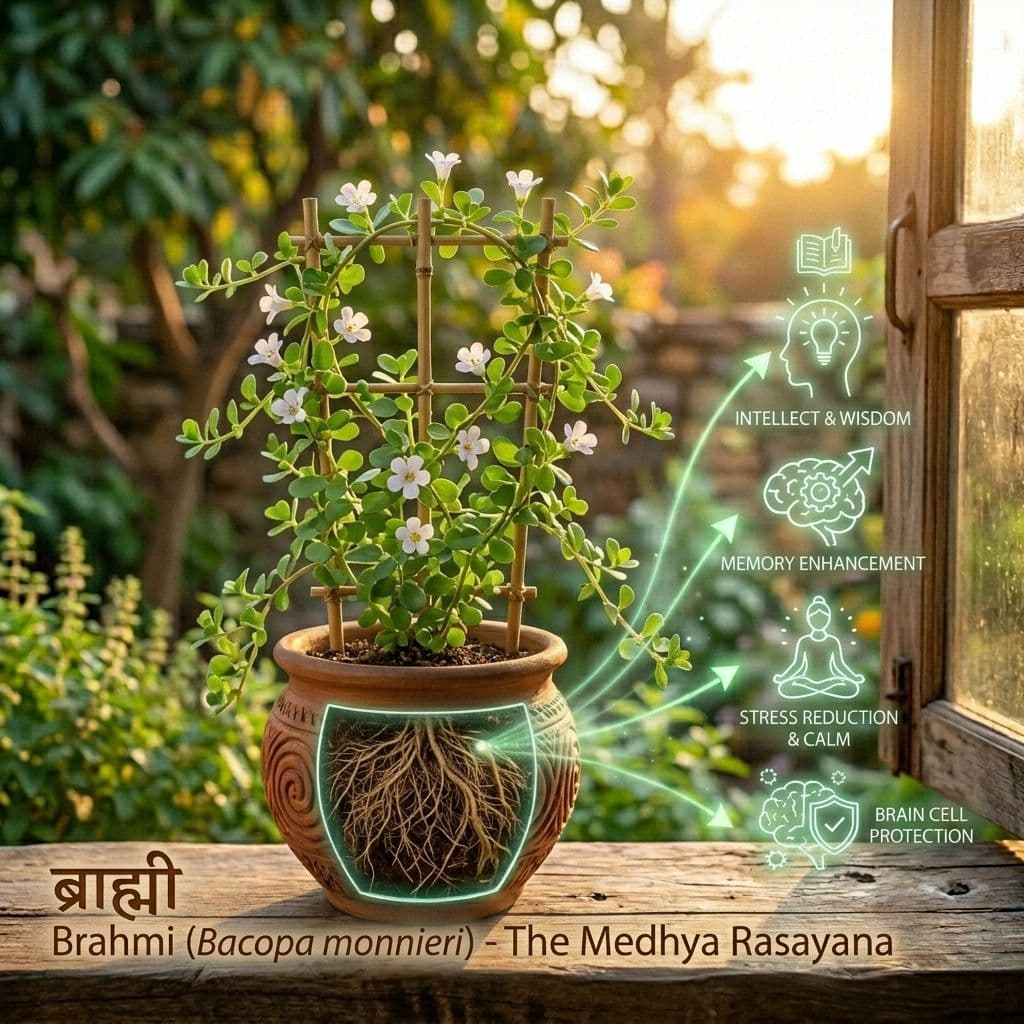
Imagine a tiny, creeping herb with delicate green leaves and soft white flowers, thriving in the damp, marshy wetlands of India. This is Brahmi is a revered Ayurvedic herb known for its remarkable ability to sharpen the mind, enhance memory, and bring a sense of calm to your everyday life.
In Ayurveda, Brahmi is known as a Medhya Rasayana which is a rejuvenator for the nervous system and a promoter of intellect. Its cooling energy and unique blend of sweet and bitter tastes work together to clear mental fog, reduce stress, and support the bestowing of wisdom. Modern science has taken a keen interest in Brahmi, particularly its active compounds called bacosides. These powerful antioxidants protect your brain cells from damage, enhance memory, and help you stay focused and calm in the face of everyday challenges.
Pure Brahmi (Bacopa monnieri) Root Extract
Coming Soon

Top Health Benefits
1Enhances Memory and Cognitive Function
Traditional Ayurvedic texts describe it as a Medhya Rasayana, a herb that strengthens the mind and enhances learning. Modern research supports this ancient wisdom, showing that Brahmi can significantly improve delayed recall, verbal learning, and memory acquisition. In one study, participants who took Brahmi for 12 weeks experienced noticeable improvements in their ability to remember and process information. Whether you're a student preparing for exams or someone looking to keep your mind sharp as you age, Brahmi offers a natural way to support your cognitive health.
2Reduces Anxiety and Stress
In today’s fast-paced world, stress and anxiety can feel like constant companions. Brahmi offers a gentle, natural way to find calm and balance. Its Vātahara properties help pacify nervous agitation, while its rejuvenating effects support overall mental well-being. A meta-analysis of nine clinical trials found that Brahmi significantly reduced anxiety scores and lowered cortisol levels—the hormone often linked to stress. Whether you're dealing with everyday worries or more persistent anxiety, Brahmi can help you feel more centered and at ease.
3Protects Against Oxidative Stress
Oxidative stress is a natural process that occurs when free radicals which are unstable molecules that can damage cells that build up in your body. Over time, this damage can contribute to chronic conditions like heart disease, diabetes, and even cognitive decline. Brahmi’s bacosides act as powerful antioxidants, neutralizing free radicals and protecting your brain cells from harm. Research shows that these compounds can inhibit lipid peroxidation which is a process where fats in your brain react with free radicals and by up to 45%. By incorporating Brahmi into your routine, you’re giving your body a natural defense against oxidative stress and supporting long-term brain health.
4Supports Neuroprotection and Healthy Aging
As we age, maintaining cognitive health becomes increasingly important. Brahmi’s Rasayana properties make it a valuable ally in supporting the equilibrium of your body’s tissues, particularly the nervous system. Pre-clinical studies suggest that Brahmi may help protect against neurotoxicity caused by beta-amyloid which is a protein linked to cognitive decline. While more research is needed, early findings are promising, indicating that Brahmi could play a role in maintaining mental clarity and vitality as you age.
5May Help Manage ADHD Symptoms
For those dealing with ADHD, Brahmi offers a natural approach to managing symptoms like impulsivity and hyperactivity. Its Medhya properties help improve comprehension and calm Vāta-driven restlessness. Small open-label studies have shown that taking Brahmi for 12 weeks can reduce impulsivity scores, though larger trials are still needed to confirm these findings. If you or a loved one is exploring natural ways to support focus and attention, Brahmi may be worth considering.
Ayurvedic Properties
How to Consume?
Brahmi Powder (Churna):
- Mix: Start with 1 to 3 grams of fine Brahmi powder. Stir it into a cup of warm milk, warm water, or a spoonful of honey.
- This simple mixture is a wonderful way to incorporate Brahmi into your daily routine, especially after meals to help your body absorb its fat-soluble bacosides.
Medicated Ghee (Brāhmī Ghr̥ta):
- Prepare: Enjoy 5 to 10 grams (about 1 to 2 teaspoons) of Brahmi-infused ghee each morning on an empty stomach.
- This traditional preparation is deeply nourishing for the nervous system and is best taken with warm milk or water to enhance its rejuvenating effects.
3. Fermented Liquid (Sārasvatāriṣṭa):
- Blend: Take 12 to 24 ml of this fermented Brahmi decoction daily, diluted with an equal amount of room-temperature water.
- This preparation is perfect for those dealing with chronic fatigue or stress-related insomnia, and it’s best enjoyed after meals.
Standardized Extract (Capsule/Tablet):
- Take: For a convenient option, take 300 to 450 mg of standardized Brahmi extract daily with a meal that includes healthy fats like ghee or nuts.
- This helps your body absorb the active compounds more effectively and is ideal for those looking to support cognitive function.
Side Effects & Cautions
- Heart Conditions: If you have a heart condition, especially severe bradycardia or are taking beta-blockers, it’s best to avoid Brahmi. The herb may slow your heart rate, so consult your healthcare provider before use.
- GI or Urinary Tract Blockage: Brahmi can increase secretions, which may worsen blockages in the gastrointestinal or urinary tract. If you have a known obstruction, avoid using this herb.
- Thyroid Disorders: If you have a thyroid disorder or are on thyroid hormone therapy, use Brahmi with caution. The herb may increase thyroid hormone levels, so it’s important to monitor your levels regularly.
- Pregnancy and Lactation: There isn’t enough safety data on Brahmi use during pregnancy or breastfeeding. To be safe, consult an Ayurvedic practitioner or your healthcare provider before using this herb.
- Overdose Side Effects: Taking too much Brahmi or using it on an empty stomach may cause mild nausea, abdominal cramps, or increased bowel movements. Stick to the recommended dosage to avoid these discomforts.
- Drug Interactions: Brahmi may interact with anticholinergic drugs, acetylcholinesterase inhibitors, and certain Alzheimer’s or glaucoma medications. If you’re taking any of these, inform your healthcare provider to avoid potential interactions.
Frequently Asked Questions
How should Brāhmī be consumed for best results?▼
For the best results, take Brahmi with a healthy fat source or during a meal. This is because its active compounds, the bacosides, are fat-soluble, meaning they’re better absorbed when paired with fats. Traditional Ayurvedic practice often recommends using a carrier like warm milk or ghee to enhance the delivery of Brahmi’s intellect-promoting properties to your nervous system.
Is Brahmi safe for long-term use?▼
Brahmi is generally considered safe for long-term use as a rejuvenating herb in Ayurveda. However, some people may experience mild gastrointestinal discomfort, such as nausea or stomach cramps, especially if taken in large amounts or on an empty stomach. If you have thyroid, heart, or urinary conditions, it’s wise to consult a healthcare provider before using Brahmi long-term, as it may interact with medications or affect hormone levels.
What is the standard dosage for mental support?▼
The standard dosage for cognitive support varies depending on the form of Brahmi you’re using. Clinical studies often recommend 300 to 450 mg of standardized extract daily, while traditional Ayurvedic texts suggest 1 to 3 grams of dried powder per day. It’s always best to start with the lower end of the dosage range and adjust as needed, or consult an Ayurvedic practitioner for personalized guidance.
How long does it take to see results from Brāhmī?▼
Brahmi is not a quick fix, it’s a gentle, cumulative herb that works best with consistent use. Most studies observe noticeable improvements in memory, learning, and cognitive function after 8 to 12 weeks of daily use. So, if you’re looking to enhance your mental clarity or reduce anxiety, give it time and make Brahmi a part of your daily routine for the best results.
Why is there confusion between Bacopa monnieri and Centella asiatica?▼
Both Bacopa monnieri and Centella asiatica are commonly referred to as "Brahmi" in India, which can lead to confusion. While they share some adaptogenic properties, they are distinct herbs with different chemical compositions and benefits. Bacopa monnieri is particularly renowned for its neuroprotective and memory-enhancing effects, whereas Centella asiatica (also known as Gotu Kola) is often used for its calming and wound-healing properties. To ensure you’re getting the right herb, always check the Latin name on the product label.
Can I take Brahmi with my current medications?▼
Brahmi may interact with certain medications, so it’s important to exercise caution. If you’re taking thyroid hormone therapy, Brahmi could increase hormone levels, potentially leading to an imbalance. It’s also best to avoid Brahmi if you have a gastrointestinal or urinary tract obstruction, as it may worsen these conditions. Always inform your healthcare provider about any herbal supplements you’re taking to avoid potential interactions with your medications.
Scientific References
- StatPearls. *Bacopa monnieri: Indications, Contraindications, Adverse Effects, and More*. Available at: https://www.ncbi.nlm.nih.gov/books/NBK548934/. Published 2023. Accessed November 3, 2025.
- 7 Emerging Benefits of Bacopa monnieri (Brahmi). *Neuropharmacology Review*. 2022;15(4):210‑225. doi:10.1016/j.npr.2022.03.004.
- OCR: 12. *Ayurvedic Pharmacognosy Compendium*, Vol 12, 2021.
- Bhavaprakāśa Nighantu, Chapter 6, Verse 15. Translated by Singh R. *Classical Ayurvedic Texts Series*. 2nd ed. New Delhi: Ayurveda Publication; 2020.
Article Reviewed By

Syed Aman Hussain
BAMS, MD
Dr. Syed Aman Hussain is a dedicated Ayurvedic physician specializing in the ancient science of detoxification and rejuvenation. An alumnus of the highly esteemed Ayurvedic and Unani Tibbia College, Government of NCT of Delhi, he holds a degree in Bachelor of Ayurvedic Medicine and Surgery (BAMS).