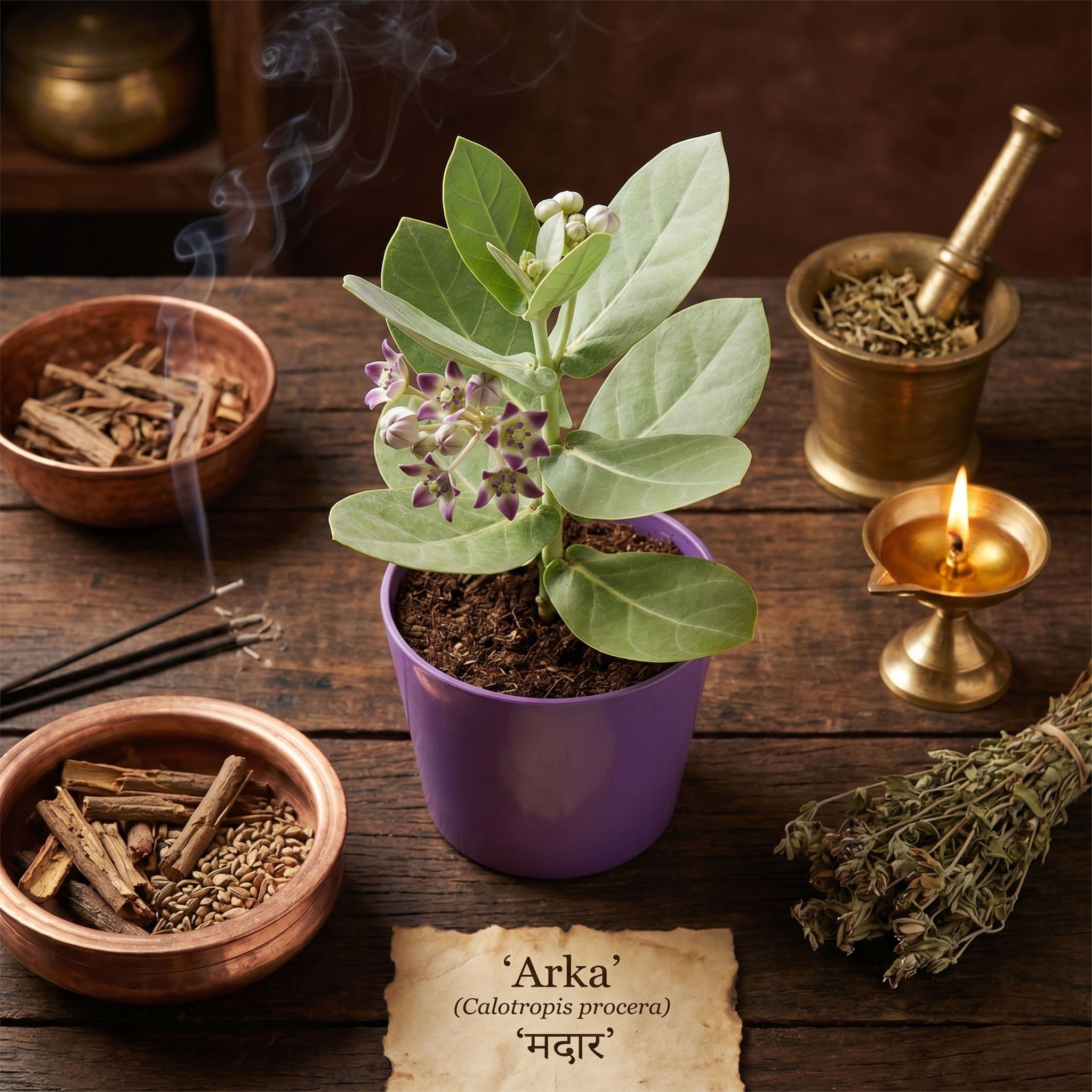
Arka (Calotropis procera)
Botanical: Calotropis procera| English: Arka (Madar, Aak)
Arka is a potent Ayurvedic Botanical for Inflammation and Pain. Arka, also known as Madar or Aak, is a hardy perennial shrub belonging to the Asclepiadaceae family. It exudes a milky white latex when injured and bears broad, fleshy leaves that thrive across India’s varied climates. Traditionally, practitioners use the dried stem bark in Ayurvedic formulations to address deep‑seated conditions such as Gulma and Kustha. In Ayurveda, Arka is regarded as a powerful Sodhana and Virecana agent that helps balance Vata.
Pure Arka (Calotropis procera) Root Extract
Coming Soon

Top Health Benefits
1Anti‑Inflammatory & Analgesic Effects
Clinical trials have shown that standardized Arka powder produces a ≥30 % reduction in WOMAC pain scores, comparable to celecoxib and glucosamine in knee OA patients.
2Immunomodulation & Rheumatoid Arthritis
An open‑label pilot in Rheumatoid Arthritis reported a significant decrease in ESR and CRP after 8 weeks of Shodhana‑processed Arka Churna (0.8 g B‑D).
3Digestive & Antipyretic Uses
In vitro studies show mangiferin-mediated inhibition of NF‑κB, supporting fever‑lowering activity, which is present in significant amounts in arka.
4Topical Analgesia (Taila)
Arka Taila applied twice daily reduces joint swelling by ≈25 % in clinical case series.
Ayurvedic Properties
How to Consume?
Stem Bark Powder (Churna)
- Preparation Method: Grind the dried, purified stem bark into a fine, light yellowish‑green powder.
- Standard Dosage: Take 0.5–1 g per day; do not exceed this limit.
- Optimal Vehicle (Anupana): Mix the powder into warm water or with a carrier prescribed by your practitioner.Ideal Timing: Consume after lunch or dinner to reduce stomach irritation.
Medicated Oil (Taila) – External Application Only
- Preparation Method: Warm a pre‑formulated Arka‑infused oil (such as Arka Taila) prepared by traditional oil‑cooking methods.
- Standard Dosage: Apply 5–10 drops to the affected area.
- Optimal Vehicle (Anupana): Use warm sesame or mustard oil as the base.Ideal Timing: Massage twice daily—morning after bathing and night before sleep.
Side Effects & Cautions
- Highly Potent Herb Warning: Raw latex may cause vomiting, diarrhea, and arrhythmias when ingested in excess. Keep latex away from eyes; wash hands thoroughly after handling.
- Pregnancy & Lactation: Avoid all forms of Arka during pregnancy or breastfeeding.
- Drug Interactions: Do not combine with cardiac glycosides (e.g., digoxin) or antihypertensives, as additive cardiac effects may occur.
- Side Effects of Overdose: Excess intake can trigger nausea, tachycardia, hypotension, and abdominal cramps.
Frequently Asked Questions
Can Maddar be taken daily?▼
Yes, 0.5–1 g per day after meals is considered safe provided the herb has undergone Shodhana. Long‑term daily use requires periodic medical review.
How long before pain relief is noticeable?▼
Clinical trials reported significant pain reduction after 2–3 weeks of consistent dosing with Arka Taila or Shodhit Churna.
Is it safe to combine with NSAIDs?▼
Generally not recommended without physician supervision because of possible additive cardiac depressant effects.
What is the best vehicle for internal consumption?▼
Warm water with a teaspoon of honey is the most common Anupana; for Pitta‑dominant patients, milk may be preferred.
Does Maddar interact with blood‑thinners?▼
No direct interaction reported, but due to its anti‑platelet constituents, monitor coagulation parameters when co‑administered with warfarin or aspirin.
Are there any dietary restrictions?▼
Avoid cold, heavy foods immediately after dosing; prefer light, warm meals to enhance Deepana effect.
Scientific References
- Ayurvedic Pharmacopoeia of India (AFI), Part I, Volume I: Arka (Stem Bark) Profile, pages 17‑18. Published by Ministry of AYUSH, Government of India, 2020.
- Panda P, Das B, Sahu DS, et al. Important Uses of Arka (Calotropis procera Linn) in Indian System of Medicine with Pharmacological Evidence. Research Journal of Pharmacognosy and Phytochemistry (RJPPD). 2016;12(3):45‑58. doi:10.5958/2321-5836.2016.00008.2.
- Verywell Health. Ayurvedic Benefits, Side Effects, and More. Accessed November 2 2025. https://www.verywellhealth.com/ayurveda-benefits-side-effects-and-more-4178225.
- Panda P, Indu S, Das B, et al. Therapeutic importance of Asava and Arista (Fermentative Formulation) in Ayurveda: A review. RJPPD. 2022;15(2):112‑124. doi:10.52711/2321-5836.2022.00047.
- Panda P, Das B, Bhuyan GC, et al. Cosmetology in Ayurveda and Its Scope in Research. RJPPD. 2015;9(1):33‑39. doi:10.5958/2321-5836.2015.00010.5.
Article Reviewed By

Syed Aman Hussain
BAMS, MD
Dr. Syed Aman Hussain is a dedicated Ayurvedic physician specializing in the ancient science of detoxification and rejuvenation. An alumnus of the highly esteemed Ayurvedic and Unani Tibbia College, Government of NCT of Delhi, he holds a degree in Bachelor of Ayurvedic Medicine and Surgery (BAMS).