Ved Club
Back to Diseases
Disease Management

Ayurvedic Treatment for Drug Eruption

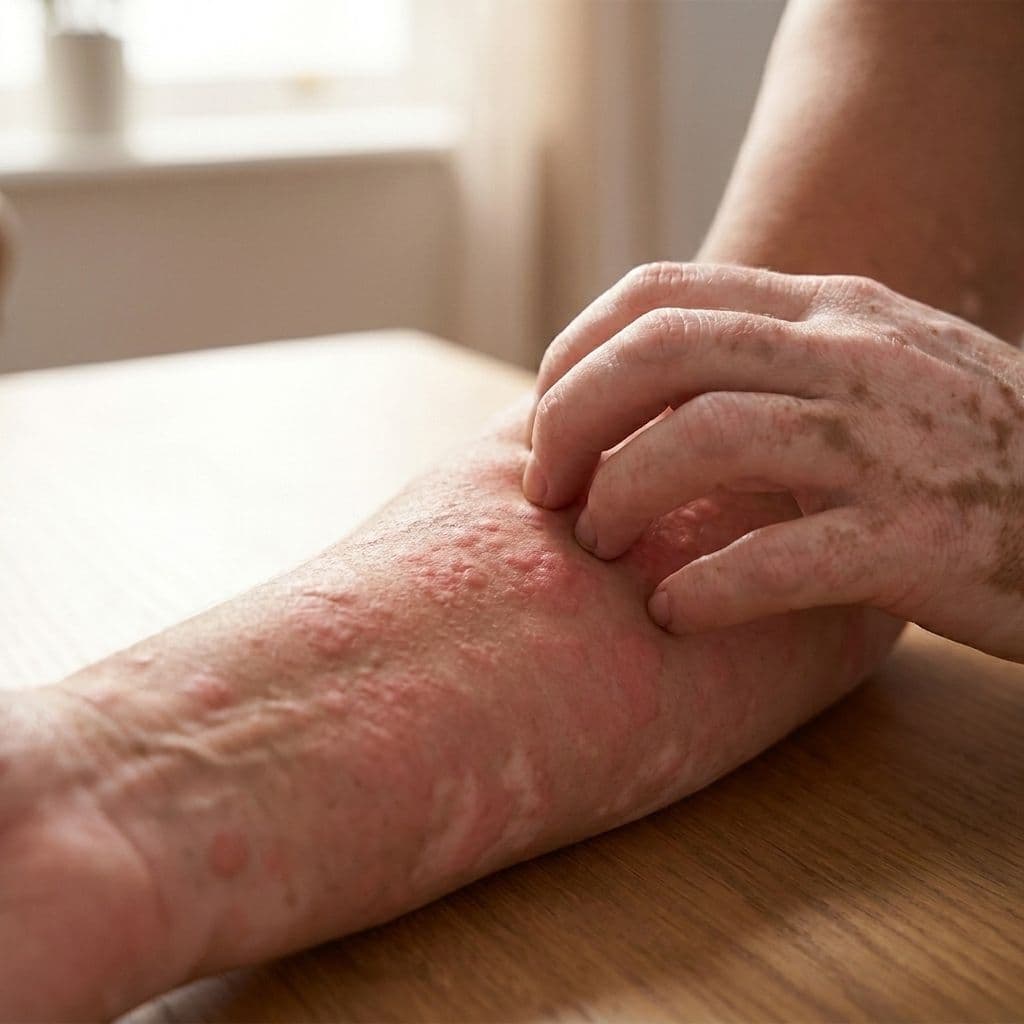
Drug eruption, known as a cutaneous adverse drug reaction in modern medicine, manifests as redness, inflammation, itching, and rashes often after taking medication. Ayurveda views this condition as a disturbance of Rakta (blood) dosha and dominance of Pitta and Kapha, triggered by allergic responses to pharmaceutical chemicals.

Ayurvedic Treatment for Drug Eruption

Overview & Modern Science

Modern medicine sees drug eruption as a cutaneous adverse drug reaction.

It appears as redness, inflammation, itching, and rashes often after taking a medication.

Ayurveda views drug eruption as a disturbance of Rakta ja and Pitta-Kapha dominance.

Allergic response to pharmaceutical chemicals provokes this imbalance.

Common Symptoms

Modern medicine sees drug eruption as a cutaneous adverse drug reaction.

It appears as redness, inflammation, itching, and rashes often after taking a medication.

Ayurveda views drug eruption as a disturbance of Rakta ja and Pitta-Kapha dominance.

Allergic response to pharmaceutical chemicals provokes this imbalance.

Causes & Triggers

  • Imbalanced Doshas: Drug eruptions typically stem from a vitiation of the Rakta (blood) dosha combined with an excess of Pitta and Kapha. This internal heat and toxic accumulation disturb the skin surface.
  • Root Causes (Nidana): These eruptions are primarily triggered by allergic responses to pharmaceutical medications or exposure to incompatible chemical substances that create systemic toxicity.

The Ayurvedic Perspective

  • Cleansing Therapies (Panchakarma): Virechana (purgation) removes accumulated metabolic toxins.
  • Raktamokshana (blood letting) addresses severe inflammatory cases.
  • Raktashodhana (blood purification) supports detoxification.

Recommended Herbs & Treatment

  • Manjistha (Indian madder): Supports blood purification and reduces inflammation.
  • Khadira (Acacia catechu): Helps calm irritation and supports skin health.
  • Nimba (Neem): Provides cooling effect and antimicrobial action.
  • Khadirarishtam (herbal ferment): Aids internal detoxification.
  • Patolakaturohinyadi kashayam (herbal decoction): Soothes skin irritation.
  • Guduchi satva (Tinospora extract): Boosts immunity and promotes healing.

Home Remedies

Diet & Lifestyle (Ahara-Vihara)

  • Light, easily digestible food (Laghu): These foods reduce the digestive burden and prevent further toxin formation.
  • Bitter vegetables (Tikta saka): Bitter flavors help clear blood toxins and pacify the excess heat of Pitta.
  • Cooling fluids like coconut water: These hydrate the system and provide a cooling effect to soothe internal inflammation.
  • Spicy, oily, or fermented foods: These items increase body heat and aggravate the already sensitive skin.
  • Excessive sour (Amla) or salty (Lavana) intake: These tastes interfere with blood purity and can trigger further itching or rashes.

Understanding the Disease: Modern & Ayurvedic View

Ayurvedic Treatment Approach

The core Ayurvedic treatment for drug eruptions includes cleansing therapies (Panchakarma) such as Virechana, Raktamokshana, and Raktashodhana to eliminate toxins and restore balance. Herbal medicines like Manjistha, Khadira, and Nimba are used to purify the blood, reduce inflammation, and promote skin healing. Diet and lifestyle adjustments, including consuming light, easily digestible foods and avoiding spicy or fermented items, further support recovery.

Frequently Asked Questions

Can Ayurveda help with drug induced skin rashes?

Yes, Ayurveda focuses on purifying the blood and cooling the Pitta dosha, which are typically aggravated during drug reactions.

Is detoxification necessary for drug eruptions?

Shodhana detoxification procedures like Virechana are highly recommended to clear the drug induced toxins from the system.

How long does Ayurvedic treatment take for skin eruptions?

The duration depends on the severity, however, chronic skin manifestations usually require a course of internal medication combined with external soothing therapies.

What is the primary Ayurvedic treatment principle for drug eruptions?

The core treatment includes Raktashodhana for blood purification, Pittahara to pacify internal heat, and Vranaropana to heal skin lesions.

What lifestyle changes should be made to support skin recovery from drug reactions?

It is important to maintain cleanliness of the affected area, avoid direct sunlight, manage stress, and refrain from using harsh soaps or perfumes.

Conclusion

Drug eruption, a common cutaneous adverse drug reaction, can be effectively managed through Ayurveda by focusing on blood purification, balancing Pitta and Kapha doshas, and adopting supportive diet and lifestyle practices. Cleansing therapies like Virechana and Raktamokshana, along with herbal remedies such as Manjistha and Nimba, play a crucial role in detoxifying the body and healing the skin. Maintaining cleanliness, avoiding direct sunlight, and managing stress are essential lifestyle adjustments to support long-term recovery. Always consult an experienced Ayurvedic practitioner to tailor treatments to your specific needs and ensure safe, holistic healing.

Reviewed By

Syed Aman Hussain

Reviewed By

Syed Aman Hussain

BAMS, MD

View Profile →
Book Consult