Today we are helping you with a Diet Plan for Kids and Teens focused on promoting healthy growth, strong immunity, and high energy using real, traditional Indian foods. The plan strongly recommends nutrient-dense items like Cow’s Ghee for brain health, Green Moong Dal for muscle growth, Ragi for strong bones, and seasonal fruits, while strictly advising against refined options like White Sugar and Maida, ice-cold water, and packaged, high-salt snacks that cause energy crashes and poor focus. Key guidelines emphasize making lunch the largest meal of the day, having a light dinner by 7:30 PM or 8:00 PM for better sleep, and always ensuring the child eats sitting down without screens. The document includes a detailed 7-day sample meal plan and offers budget-friendly tips, such as using Jaggery instead of sugar and Besan instead of costly Paneer, to make the healthy plan practical for every family .
A Simple Guide for Kids and Teens
Think of the food like high-quality fuel for a car. Your body needs this fuel to grow, learn, and stay active. It gives you energy and protects you from getting sick. This plan works well for everyone from toddlers to teenagers. It builds strong habits that will last a lifetime. This diet plan follows official rules for healthy eating at every age. It focuses on real, whole foods like fruits, vegetables, and whole grains. You should also eat lean proteins and low-fat dairy. The goal is to avoid extra sugars and processed foods. This plan helps families pick the best food for proper growth and health.
View 7-Day Plan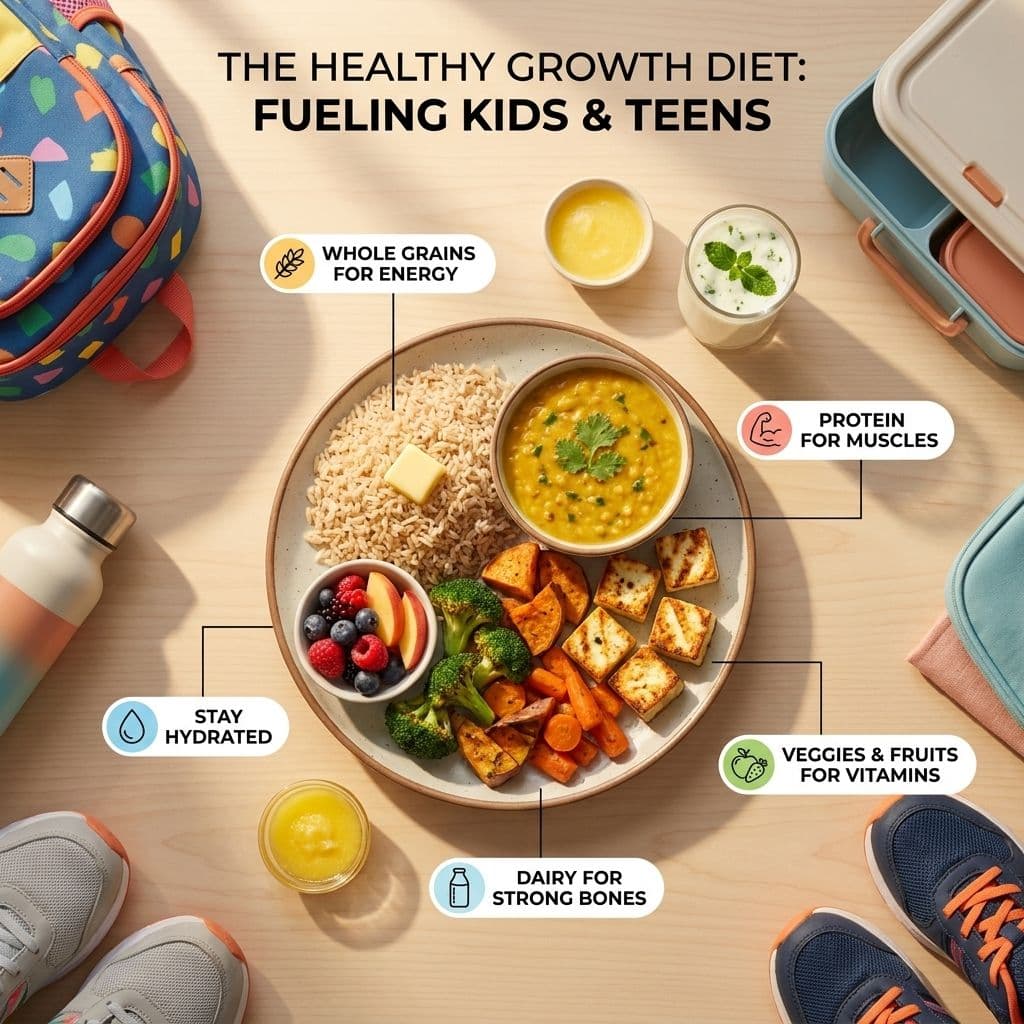
Foods To Include
- Cow’s Ghee: Build brain power and keep digestive strength strong.
- Green Moong Dal: Easy to digest and helps muscles grow.
- Whole Wheat & Dalia: Gives steady energy for school and play.
- Ragi (Finger Millet): High in calcium for strong bones and teeth.
- Bottle Gourd (Lauki) & Pumpkin (Kaddu): Cool the stomach and are easy to digest.
- Fresh Milk & Curd: Provide vital energy and keep bones strong.
- Seasonal Fruits (Banana, Papaya): Natural sweets that give daily energy.
- Digestive Spices: Use small amounts of Haldi (Turmeric), Jeera (Cumin), and Ajwain.
Budget Ayurvedic Grocery & Prep Guide
- Smart Shopping: Buy whole grains (Wheat, Rice), Dals (Moong, Masoor), Ghee, and seasonal vegetables from the local mandi. These are cheaper and fresher than "health foods".
- Easy Prep Tips:
- Soak all pulses (dals) for 2 hours before cooking to remove "gas" and aid digestion.
- Dry roast Suji or Poha in advance to save time on busy school mornings.
- Prepare a basic "tadka" of jeera and haldi to add to any meal for health.
- Smart Swaps:
- If Paneer is costly, use Besan (Gram flour) for protein.
- Use Jaggery (Gur) instead of expensive honey or white sugar.
Foods To Avoid
- Ice Cold Water: Puts out digestive strength and slows growth.
- White Sugar & Maida: Cause energy crashes and poor focus.
- Leftover (Stale) Food: Loses life energy and causes heaviness.
- Milk with Salt or Sour Fruits: Bad combinations that cause skin or tummy issues.
- Packaged Snacks: High salt and chemicals harm growing bodies.
The 7-Day Protocol
Warm dalia upma with jeera and peas.
Poha with curry leaves and peanuts.
2 rotis, yellow moong dal, and cooked lauki sabzi.
A handful of roasted makhana with haldi.
Warm moong dal khichdi with 1 spoon ghee
Suji (semolina) halwa made with moderate ghee.
Steamed idli with mild coconut chutney.
Ragi malt (porridge) with milk.
Wheat roti, masoor dal, and bhindi (ladyfinger) sabzi.
Seasonal fruit like guava or pear.
Mixed veg daliya khichdi.
Besan (gram flour) toast with minimal oil.
Veg daliya with carrots and beans.
2 rotis, chana dal, and parwal sabzi.
Small slices of fresh papaya.
Half a cup of fresh curd with a little jaggery.
Jowar khichdi with plenty of vegetables.
Frequently Asked Questions
Is a healthy diet for children and teens expensive?▼
Eating healthy does not have to be expensive if you plan meals ahead of time. Buying staple foods like whole grains, dals, and pulses in bulk and choosing seasonal fruits and vegetables can keep your food budget low.
Do I need to buy special “health” or “organic” foods?▼
No, you do not need to buy expensive “health” or “organic” foods to ensure your child gets proper nutrition. Most foods found in your garden or a standard market provide the necessary nutrients for growth.
How do I help my child build healthy eating habits?▼
The best way is to involve children in choosing and preparing family meals. When children help pick ingredients and cook, they are more likely to enjoy the food they helped create.
Can I include snacks in my child’s diet plan?▼
Yes, snacks are an important part of a child’s daily energy intake. Instead of sugary or fried items, offer nutrient‑dense snacks like fruit, yogurt, nuts, or homemade cereal‑based dishes.
Are carbohydrates “fattening” for school children?▼
No, carbohydrates like rice and potatoes are not fattening on their own; they are essential for providing energy. Weight gain occurs when energy intake is consistently higher than what the body burns through activity.
Reviewed By

Reviewed By
Syed Aman Hussain
BAMS, MD
View Profile →