Ved Club
Back to Diets
Diet Plan

Nutrition During Lactation

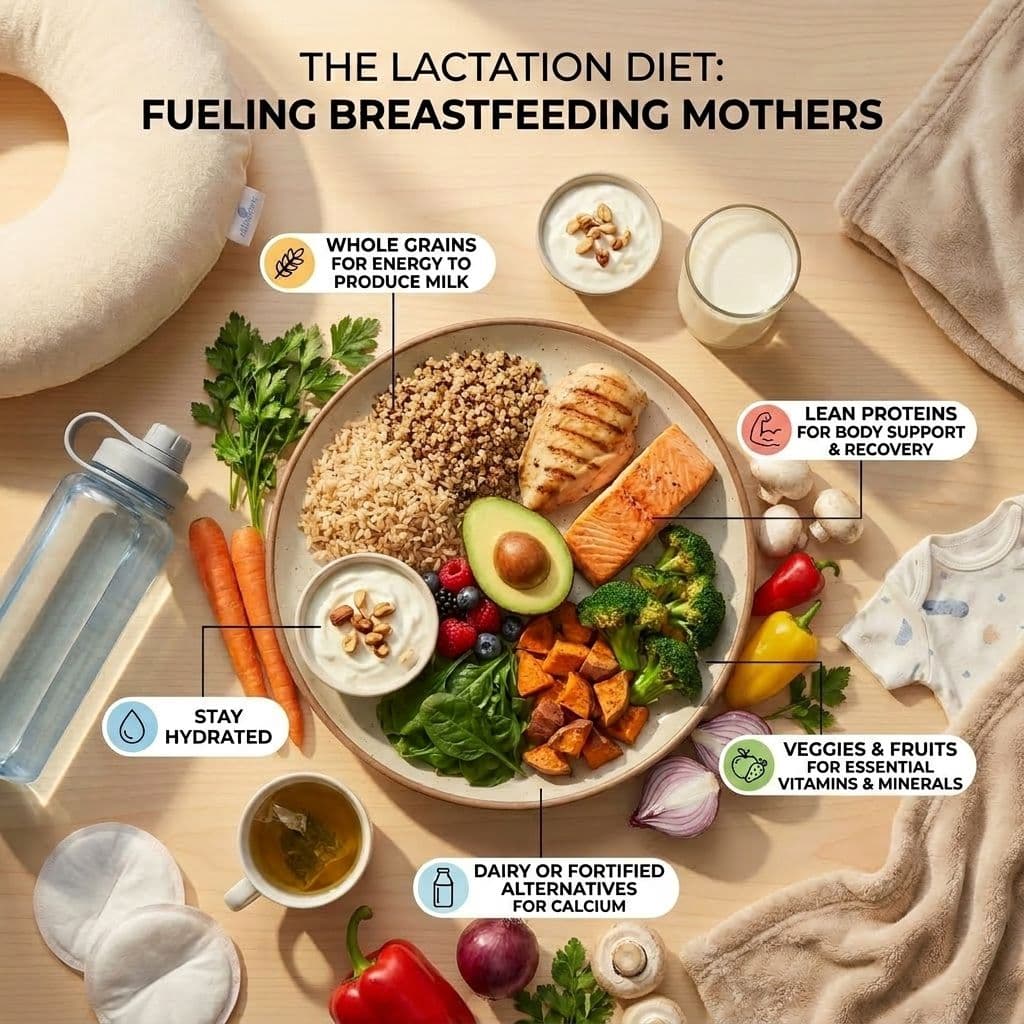
Lactation is a critical phase requiring increased nutritional intake to support both the mother's health and the infant's growth. This diet plan provides Ayurvedic and evidence-based guidance on foods to eat, foods to avoid, and a balanced meal plan to ensure optimal nutrition during breastfeeding.

View 7-Day Plan
Nutrition During Lactation

Lactation is a demanding physiological phase where a mother's body requires substantially higher nutritional intake to produce quality breast milk while maintaining her own health. Proper nutrition during this period ensures adequate milk supply, supports the infant's development, and helps the mother recover from childbirth.

Nutritional Requirements During Lactation

During lactation, a mother's caloric needs increase by approximately 500 calories per day. Key nutrients that require special attention include:

  • Calories: +500 kcal/day above pre-pregnancy needs
  • Protein: 65–75 g/day to support milk protein synthesis
  • Calcium: 1000–1300 mg/day for bone health of mother and infant
  • Iron: 9–10 mg/day to replenish postpartum losses
  • Iodine: 290 mcg/day for infant thyroid and brain development
  • Vitamin D: 600 IU/day for calcium absorption
  • Omega-3 Fatty Acids (DHA): 200–300 mg/day for infant brain development
  • Folate: 500 mcg/day for cell growth and repair
  • Zinc: 12 mg/day for immune function and growth
  • Fluids: 3–3.8 liters/day to maintain milk production
  • Ayurvedic Approach to Lactation Nutrition (Stanyajanana)

Foods To Include

Include the following foods in your daily diet during lactation to ensure optimal nutrition for both mother and baby:

Grains & Cereals

  • Whole wheat, rice, oats, barley, and millets (ragi, bajra) — provide sustained energy and fiber
  • Amaranth (Rajgira) — rich in calcium, iron, and protein
  • Sago (Sabudana) — easily digestible and provides quick energy

Protein-Rich Foods

  • Lentils (dal), chickpeas, kidney beans, and moong dal — excellent plant-based protein sources
  • Paneer (cottage cheese) — rich in calcium and protein, easily digestible
  • Lean chicken, fish (especially salmon, sardines) — high-quality protein and omega-3
  • Eggs — complete protein, rich in choline for infant brain development
  • Shatavari powder with milk — Ayurvedic galactagogue that boosts milk production

Dairy Products & Healthy Fats

Full-fat milk and yogurt (dahi) — calcium, probiotics, and protein

Ghee (clarified butter) — lubricates tissues, aids digestion, and pacifies Vata (1–2 tsp/day)

Coconut milk — medium-chain fatty acids that support milk production

Flaxseeds and chia seeds — rich in omega-3 fatty acids (ALA)

Almonds, walnuts, cashews — healthy fats, calcium, and galactagogue properties

Vegetables & Fruits

  • Drumstick leaves (Moringa / Shigru) — exceptionally rich in iron, calcium, and vitamins
  • Fenugreek leaves (Methi) — potent galactagogue, rich in iron and folate
  • Spinach, kale, and green leafy vegetables — iron, folate, and vitamin K
  • Sweet potatoes — vitamin A, potassium, and complex carbohydrates
  • Papaya (ripe) — traditionally used to promote milk flow; rich in vitamins A and C
  • Dates (Khajoor) — natural sugar, iron, and galactagogue properties
  • Citrus fruits — vitamin C enhances iron absorption

Galactagogue Herbs & Spices

  • Shatavari (Asparagus racemosus) — the premier Ayurvedic herb for milk production
  • Fenugreek seeds (Methi) — phytoestrogens stimulate milk ducts
  • Fennel seeds (Saunf) — promotes milk flow and relieves infant colic
  • Cumin seeds (Jeera) — digestive, anti-inflammatory, and galactagogue
  • Ajwain (Carom seeds) — enhances digestion and uterine recovery
  • Turmeric (Haldi) — anti-inflammatory, promotes wound healing postpartum
  • Ginger (Adrak / Shunti) — improves digestion and Agni during the postpartum period

Foods To Avoid

Avoid the following foods during lactation as they may reduce milk supply, affect milk quality, or harm the infant:

Foods That Reduce Milk Supply (Stanyaghna)

  • Parsley (Ajmoda) in large quantities — may significantly reduce milk volume
  • Peppermint and spearmint — menthol can decrease milk production
  • Sage (Salvia) — traditionally used to dry up milk supply
  • Alcohol — passes into breast milk, inhibits milk ejection reflex, harms infant development
  • Excessive caffeine (>300 mg/day) — causes infant irritability and sleep disturbances

Foods Harmful to Infant Health

  • Raw or undercooked meat, fish, and eggs — risk of bacterial contamination passing to infant
  • High-mercury fish (shark, swordfish, king mackerel) — mercury passes into breast milk
  • Highly spiced foods — may cause infant colic, gas, and irritability
  • Allergenic foods (nuts, shellfish) if infant shows sensitivity reactions
  • Tobacco and nicotine products — harmful neurotoxins pass into milk

Ayurvedic Foods to Avoid (Apathya Ahara)

  • Katu (pungent), Tikta (bitter), and Kashaya (astringent) dominant foods in excess
  • Dry, light, and cold foods that aggravate Vata dosha
  • Leftover, stale, or processed foods that impair Agni (digestive fire)
  • Heavy, oily, and indigestible foods that reduce Agni
  • Excessive sour foods that may vitiate breast milk quality

The 7-Day Protocol

Day 1 / Monday
Early Morning

1 glass warm water with fenugreek seeds (soaked overnight) + 4 soaked almonds

Breakfast

2 whole wheat rotis + moong dal (with ghee) + 1 cup warm milk with Shatavari powder

Mid-Morning

1 cup roasted makhana (fox nuts) + coconut water

Lunch

Brown rice (1 cup) + drumstick leaves sabzi + rajma curry + 1 glass buttermilk with cumin

Evening Snack

Dates energy ball (2 pcs) + fennel seed tea

Dinner

2 ragi rotis + palak paneer + 1 cup dal soup + 1 glass warm turmeric milk (haldi doodh)

Day 2 / Tuesday
Early Morning

1 glass warm water with Ajwain seeds + 5 soaked cashews and walnuts

Breakfast

Oats porridge cooked with milk + jaggery + flaxseed powder + a glass of fenugreek seed milk

Mid-Morning

Fruit bowl (papaya + banana) + coconut water

Lunch

Jeera rice + chana dal + moringa sabzi + 1 glass buttermilk

Evening Snack

Til (sesame) laddoo (1 pc) + warm ginger tea

Dinner

Bajra roti + methi aloo sabzi + masoor dal + warm milk with ashwagandha

Day 3 / Wednesday
Early Morning

Warm water with cumin seeds + 4 dates + 4 soaked almonds

Breakfast

Sabudana khichdi (with ghee) + 1 boiled egg + warm milk

Mid-Morning

Mixed nut and seed bar + 1 banana

Lunch

2 wheat rotis + salmon curry + spinach dal + 1 glass buttermilk

Evening Snack

Roasted chana + fennel tea

Dinner

Khichdi (rice + moong dal + ghee) + drumstick soup + warm turmeric milk

Day 4 / Thursday
Early Morning

Warm Shatavari milk (with jaggery) + 4 soaked almonds + 2 walnuts

Breakfast

Upma (semolina with vegetables) + 1 boiled egg + coconut chutney + fennel tea

Mid-Morning

Sweet potato chaat + coconut water

Lunch

Brown rice + moong dal + beans sabzi + 1 glass buttermilk with cumin and mint

Evening Snack

Amaranth (rajgira) laddo (1 pc) + ajwain tea

Dinner

Ragi porridge (with ghee and jaggery) + boiled vegetables + warm milk with Shatavari

Day 5 / Friday
Early Morning

Fenugreek seed water + 5 soaked almonds + 2 dates

Breakfast

Moong dal cheela (2 pcs) + coriander chutney + 1 glass warm milk with Shatavari

Mid-Morning

Boiled egg (1) + makhana (fox nuts) + coconut water

Lunch

Wheat roti (2) + egg curry + palak dal + 1 glass buttermilk

Evening Snack

Gond (edible gum) laddo (1 pc) + ginger tea

Dinner

Vegetable khichdi with ghee + cucumber raita + warm turmeric milk

Day 6 / Saturday
Early Morning

Warm water with Ajwain + 4 soaked cashews + 2 figs

Breakfast

Besan (chickpea) cheela + mint chutney + 1 glass warm milk

Mid-Morning

Avocado on whole wheat toast + coconut water

Lunch

Millet (bajra) roti + chicken curry + sauteed moringa leaves + 1 glass buttermilk

Evening Snack

Khajoor (date) and almond milkshake

Dinner

Brown rice + dal tadka + ghee + 1 cup yogurt (dahi)

Day 7 / Sunday
Early Morning

Warm fenugreek water + 4 soaked almonds + 1 tsp flaxseed

Breakfast

Paneer paratha (with ghee) + curd + 1 glass warm milk with Shatavari and turmeric

Mid-Morning

Til gur chikki (1 pc) + coconut water

Dinner

Quinoa or daliya khichdi + spinach soup + warm Shatavari milk

Frequently Asked Questions

What foods should a breastfeeding mother eat to increase milk supply?

To increase milk supply, focus on galactagogue foods such as fenugreek seeds (methi), oats, moringa leaves, Shatavari herb, fennel seeds, sesame seeds, and almonds. Ensure adequate hydration by drinking at least 3-3.8 liters of fluids daily, including warm water, coconut water, and herbal teas. Maintaining regular feeding or pumping schedules also plays a crucial role in milk production.

How many extra calories does a breastfeeding mother need per day?

A breastfeeding mother needs approximately 450-500 extra calories per day above her normal pre-pregnancy caloric needs. This supports the energy required for milk production, which produces about 700-900 ml of breast milk daily. However, individual caloric needs vary based on body weight, activity level, and whether breastfeeding is exclusive or supplemented.

Is it safe to take Shatavari during breastfeeding?

Yes, Shatavari (Asparagus racemosus) is considered one of the safest and most effective Ayurvedic herbs for breastfeeding mothers. It is classified as a Stanyajanana (milk-promoting herb) in Ayurvedic texts. It supports prolactin levels, improves milk quality, and also helps with postpartum recovery. However, always consult your healthcare provider or Ayurvedic practitioner before starting any herbal supplement.

What foods should a breastfeeding mother avoid to prevent infant colic?

To prevent infant colic, breastfeeding mothers should avoid or limit: highly spiced foods, cruciferous vegetables in excess (cabbage, broccoli, cauliflower), caffeine, alcohol, citrus fruits in large quantities, dairy products if the infant shows sensitivity, and gassy foods like beans and onions in excess. If you notice that certain foods consistently cause fussiness or colic in your baby, avoid those specific foods and consult your pediatrician.

How long should a mother breastfeed for optimal infant health?

The World Health Organization (WHO) and major pediatric associations recommend exclusive breastfeeding for the first 6 months of a baby's life, providing all required nutrients. Breastfeeding should then continue alongside appropriate complementary foods for up to 2 years or beyond, as mutually desired by mother and child. Ayurveda also recommends continued breastfeeding (Stanyana) for at least 2 years to build the child's immunity and Ojas (vital essence).

Reviewed By

Syed Aman Hussain

Reviewed By

Syed Aman Hussain

BAMS, MD

View Profile →
Book Consult